

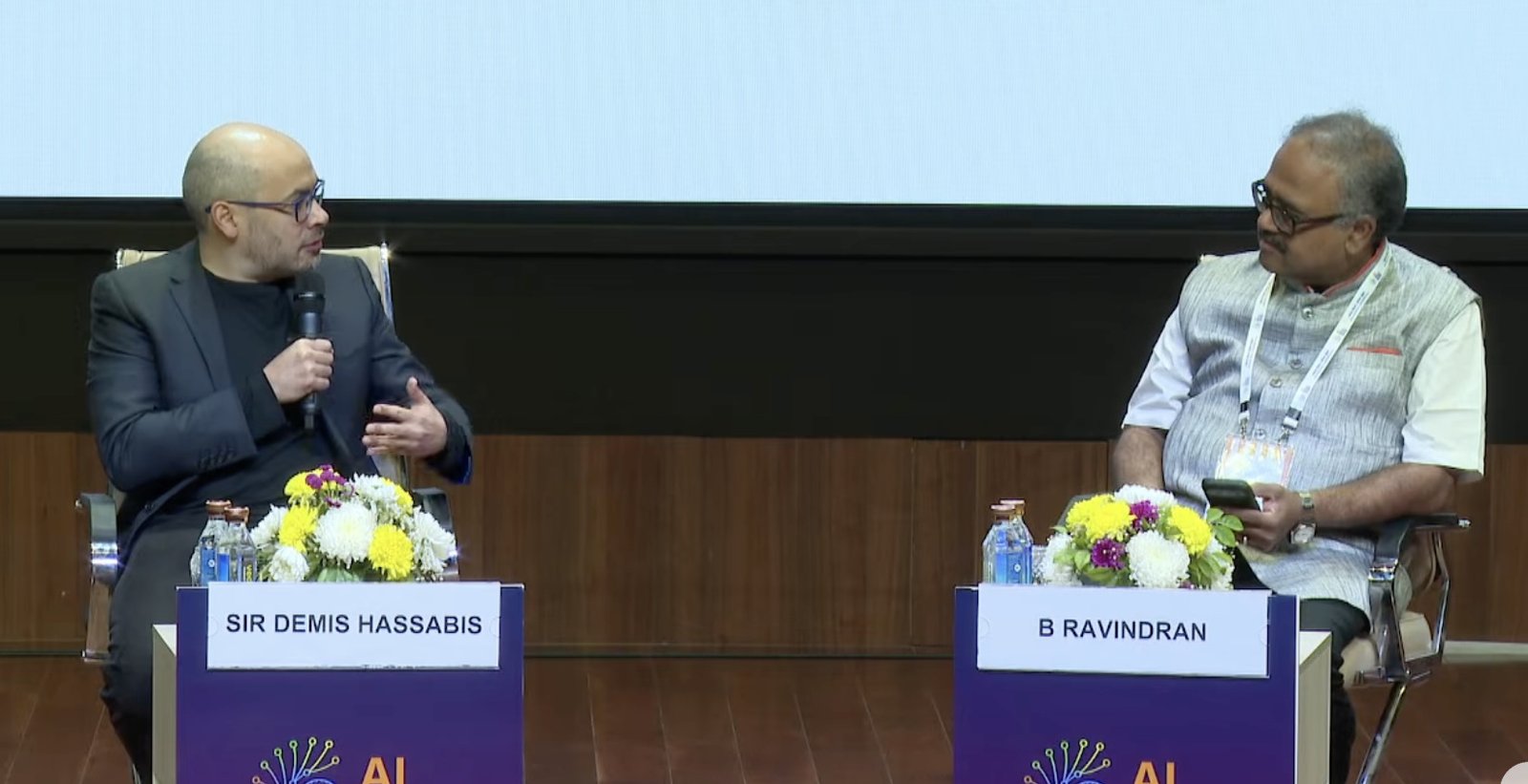
As part of the Research Symposium on Enabling AI at Nation Scale, hosted during the India AI Impact Summit, Demis Hassabis, CEO and Co Founder of Google DeepMind, delivered a keynote examining how artificial intelligence is transforming scientific research, engineering innovation, and national scale research capability.
Held at Bharat Mandapam, the session brought together researchers, policymakers, and industry leaders to explore how AI is evolving from a computational tool into an active enabler of discovery. The discussion aligned closely with the broader Symposium narrative that AI must be developed as foundational research infrastructure capable of driving long term scientific and technological progress.
The keynote was moderated by Balaraman Ravindaran, Head of the Department of Data Science and AI at IIT Madras, whose insights framed the conversation within the context of research ecosystems, academic leadership, and talent development.
Keynote Perspective
Demis Hassabis emphasised that AI is entering a phase where it can significantly accelerate scientific discovery by helping researchers analyse complex systems, generate new hypotheses, and shorten the path between experimentation and insight. He noted that combining advanced AI models with strong research environments could fundamentally reshape how science is practiced.
“AI has the potential to become one of the most powerful tools for scientific progress, helping humanity solve problems that were previously beyond reach.”
— Demis Hassabis
The keynote highlighted how AI driven discovery could impact multiple domains, including biology, medicine, climate science, and advanced engineering, while reinforcing the need for responsible development and governance as systems grow more capable.
Moderator Perspective From Balaraman Ravindaran
Balaraman Ravindaran steered the conversation toward the practical implications for academic institutions and emerging research communities. He highlighted the importance of creating bridges between global AI research and local innovation ecosystems so that universities and research centres can actively contribute to future breakthroughs.
“The real opportunity lies in enabling researchers and students to work alongside advanced AI systems, creating a new model of collaborative discovery.”
— Balaraman Ravindaran
He emphasised that nation scale AI requires sustained investment in talent, open research collaboration, and accessible computational infrastructure, ensuring that innovation is distributed across institutions rather than concentrated within a limited ecosystem.
Key Themes Discussed
AI As A Discovery Engine
AI is increasingly supporting researchers in identifying patterns and insights that accelerate scientific progress.
Bridging Research And Real World Impact
The discussion highlighted the importance of translating foundational AI research into applications that deliver tangible societal and industrial value.
Responsible Innovation And Governance
Both perspectives underscored that safety, transparency, and ethical frameworks must evolve in parallel with technological progress.
Academic And Industry Collaboration
The session reinforced the idea that collaboration between global research organisations, universities, and governments will define the next phase of AI advancement.
Strategic Relevance To The Symposium
The keynote strengthened the central narrative of the Research Symposium that AI at nation scale is not solely about technology adoption but about enabling research ecosystems capable of sustained innovation. By combining global research insights with academic moderation grounded in India’s research landscape, the session highlighted how collaborative frameworks can shape the future of scientific discovery.