

Google has highlighted a series of artificial intelligence (AI) developments announced in August 2026, spanning AI models, consumer devices, education, productivity, creative tools and scientific applications.
The company’s latest monthly AI roundup includes the launch of Gemini 3.7 Flash, Gemini 3.5 Transcribe, the Pixel 11 series powered by Google’s latest Tensor G6 chip, and new AI-powered features across Search, Chrome, Workspace and the Gemini app.
Google said its AI efforts are focused on making the technology faster, more accessible and practical across areas including software development, education, healthcare, crisis response and scientific research. The Gemini app also surpassed one billion monthly users during the month.
Google introduced Gemini 3.7 Flash as a workhorse model designed for coding, software engineering, knowledge work and web development. The model was launched three weeks after Gemini 3.6 Flash and is positioned as a more cost-efficient option for developers building AI agents and applications.
The company said Gemini 3.7 Flash delivers improvements across software engineering and agentic workflows, while its introductory pricing is half the original cost per million tokens of Gemini 3.6 Flash.
Google also launched Gemini 3.5 Transcribe, a speech-to-text model designed for real-time transcription applications including voice agents, live captioning and post-call analytics.
The model is designed to handle challenging audio environments involving background noise and specialised terminology, converting audio into context-aware transcriptions for developer applications.
At Made by Google 2026, Google unveiled the Pixel 11, Pixel 11 Pro, Pixel 11 Pro XL and Pixel 11 Pro Fold. The devices feature the company’s Tensor G6 chip, which runs the latest Gemini Nano model.
The new smartphones are designed around Google’s Gemini Intelligence capabilities, providing AI-powered assistance alongside upgraded camera systems and enhanced durability.
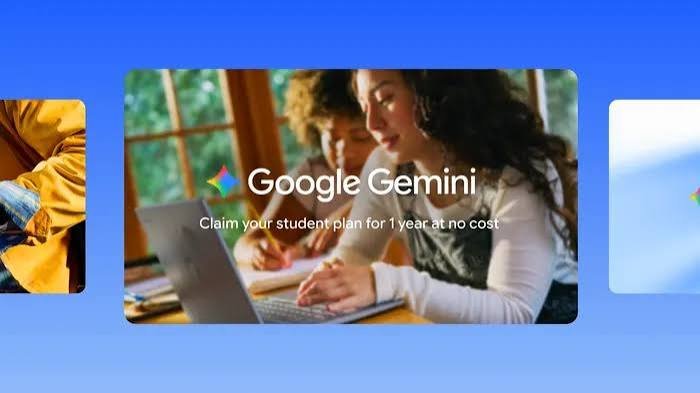
Google also announced new AI-powered learning capabilities aimed at students and teachers. Eligible college students around the world can access a Google AI plan free for one year, alongside new study tools.
AI capabilities in Google Search have also been expanded to support learning through interactive visuals, practice quizzes and step-by-step assistance through Google Lens. The company has additionally introduced tools such as notebooks to help students organise their learning.
Meanwhile, Gemini has expanded into Chrome on Android, while Google Workspace and Gemini Live are gaining hands-free voice capabilities.
Google said its August developments also extended AI into creative and scientific fields, including studio-quality video and music generation and open-source AI models designed to predict weather patterns and address climate-related challenges.
The developments reflect Google’s broader push to integrate AI into everyday products and professional workflows, while continuing to develop models and infrastructure for more specialised applications.
With new models targeting developers, AI capabilities moving deeper into consumer devices and productivity tools, and applications expanding into education, creativity and science, Google is positioning its latest AI developments around practical and increasingly accessible use cases.