
As artificial intelligence moves from research labs into real world systems shaping healthcare, climate action, and economic inclusion, one question is rising to the surface: who will build and steward this future responsibly?
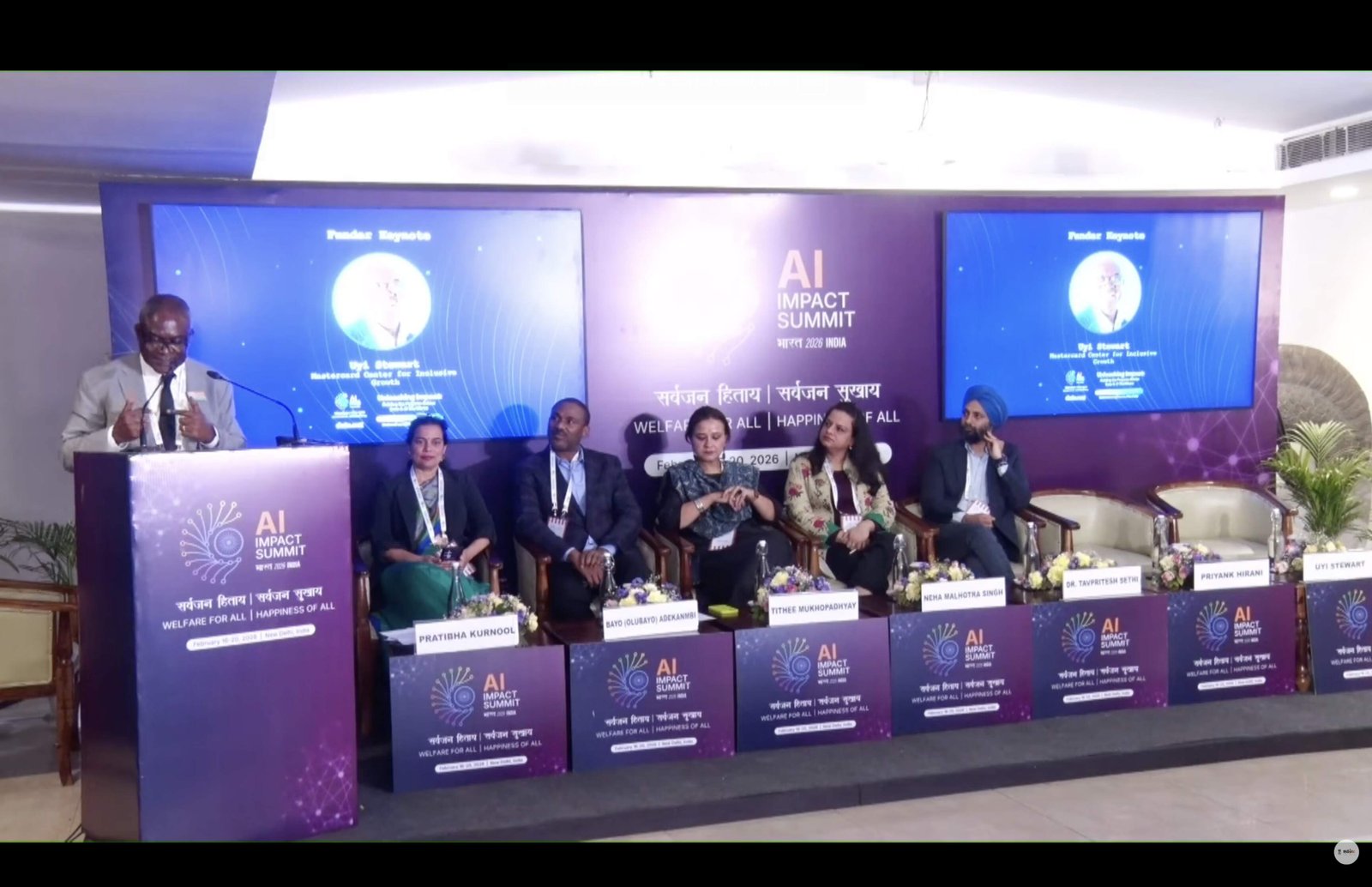
The panel session titled Unleashing Impact: Building The Purpose Driven Data And AI Workforce explored exactly this challenge. Bringing together leaders from academia, civic innovation, enterprise technology, philanthropy, and global development networks, the discussion reframed AI progress as a people first agenda. The focus was not simply on technical capability but on creating a workforce equipped to apply data and AI with societal purpose.
Drawing on insights from a global ecosystem of more than one hundred partners advancing interdisciplinary data and AI training, the session examined how collaborative learning models are preparing professionals to tackle complex issues across climate resilience, health systems, and financial inclusion.
Why This Conversation Matters
AI adoption is accelerating across sectors, yet organisations increasingly recognise that success depends on talent able to bridge technology with context. Panellists emphasised that the next phase of workforce development must combine technical literacy with ethical awareness, policy understanding, and domain specific knowledge.
Rather than viewing skills shortages as a hiring problem, the discussion positioned them as a transformation challenge. Institutions must rethink how talent is trained, mentored, and deployed so that innovation supports inclusive and sustainable outcomes.
Speaker Perspectives
Bayo (Olubayo) Adekanmbi
A recognised voice in equitable AI adoption, Bayo Adekanmbi brought strong emphasis to the idea that inclusion cannot be an afterthought in workforce design. He stressed that AI ecosystems must intentionally expand access to opportunity by investing in talent development beyond traditional technology centres. His perspective underscored the importance of building learning models that empower underrepresented communities, ensuring that AI innovation reflects diverse realities and delivers value across regions and socioeconomic contexts. For organisations, his message was clear: workforce strategies that prioritise fairness and accessibility will be far more resilient in the long term.
Dr. Tavpritesh Sethi
Dr. Tavpritesh Sethi offered an academic and systems driven lens, highlighting the growing intersection of data science, healthcare innovation, and policy frameworks. He emphasised that future AI professionals must move beyond purely technical execution and develop a deeper understanding of how models interact with real world constraints such as healthcare delivery, regulation, and societal risk. His comments reinforced the need for interdisciplinary training where algorithmic thinking is complemented by domain expertise, ethical reasoning, and implementation awareness.
Neha Malhotra Singh
Speaking from a civic innovation perspective, Neha Malhotra Singh highlighted how data and AI are reshaping governance, urban planning, and public service delivery. She pointed out that civic institutions increasingly need professionals who can translate analytical insights into citizen centred outcomes while maintaining accountability and transparency. Her contribution positioned the AI workforce as a bridge between technology and public trust, stressing that responsible innovation requires professionals who understand social context as deeply as they understand data.
Perry Hewitt
Perry Hewitt focused on the power of partnerships in scaling workforce transformation. Drawing from global collaborations, she explained that no single institution can independently prepare talent for the complexity of modern AI challenges. Cross sector alliances between academia, industry, philanthropy, and civil society were presented as essential mechanisms for accelerating skill development and ensuring that training translates into measurable societal impact. Her perspective reinforced collaboration as both a strategic necessity and an enabler of long term sustainability.
Pratibha Kurnool
From an enterprise transformation perspective, Pratibha Kurnool highlighted how job roles are rapidly evolving as AI reshapes organisational structures and skill expectations. She spoke about Cognizant’s focus on building an ecosystem driven approach to workforce development, where new initiatives are designed not merely to train employees but to reimagine how talent contributes within an AI powered economy.
She referenced the organisation’s large scale skilling ambition, including the drive to upskill one million professionals, noting that the vision has now expanded beyond numerical targets. The emphasis, she explained, is increasingly about intent and meaningful activation rather than volume alone. Programmes are being designed layer by layer, ensuring skills translate into practical activation across different organisational levels rather than remaining theoretical.
Kurnool also underscored the importance of social impact as a core pillar of workforce strategy, highlighting efforts to enable participation from broader communities through partnerships, funding support, and ecosystem collaboration. Her perspective framed AI workforce development as a shared responsibility where enterprises must go beyond internal capability building and actively contribute to strengthening the wider AI economy.
Priyank Hirani
Priyank Hirani expanded on the ecosystem approach by discussing how structured training initiatives can create sustainable pipelines of data talent. He emphasised programmes that connect education with mentorship and real deployment opportunities, ensuring that learning outcomes translate into practical impact. His contribution highlighted the importance of designing pathways that support learners beyond initial training, enabling long term professional growth in sectors where data skills are urgently needed.
Tithee Mukhopadhyay
Bringing a research and evaluation perspective, Tithee Mukhopadhyay stressed the importance of evidence based decision making in workforce development. She argued that initiatives should be measured through tangible outcomes rather than aspirational goals. By applying rigorous evaluation methods, organisations can understand which training models genuinely improve impact and scale the ones that deliver measurable results. Her viewpoint added accountability to the broader conversation around inclusive AI growth.
Uyi Stewart
Uyi Stewart linked workforce development directly to economic opportunity and inclusive growth. His perspective centred on how data literacy and AI capability can drive financial inclusion and create broader access to economic participation. He advocated for workforce models that combine commercial viability with social responsibility, positioning AI talent not only as a driver of business innovation but as a catalyst for equitable development at scale.
Key Takeaways From The Session
Interdisciplinary Talent Is The New Standard
AI professionals must combine technical expertise with policy, ethics, and domain understanding to generate meaningful impact.
Partnerships Drive Scale
No single organisation can build a purpose driven workforce alone. Collaboration across academia, industry, development agencies, and civil society emerged as a recurring theme.
Impact Beyond Employment
Success is increasingly measured by societal outcomes, community benefit, and long term resilience rather than employment figures alone.
Reskilling Is Continuous
As AI evolves, workforce development must become an ongoing process rather than a one time initiative.
Closing Perspective
The session made one idea unmistakably clear: the future of AI will be defined not just by innovation but by intention. Building a workforce capable of using data responsibly across climate, health, and financial systems is becoming a foundational requirement for sustainable progress.
As organisations accelerate their AI strategies, this discussion offered a timely reminder that technology alone cannot shape an inclusive future. People, training, and shared purpose remain the real catalysts of long term impact.