

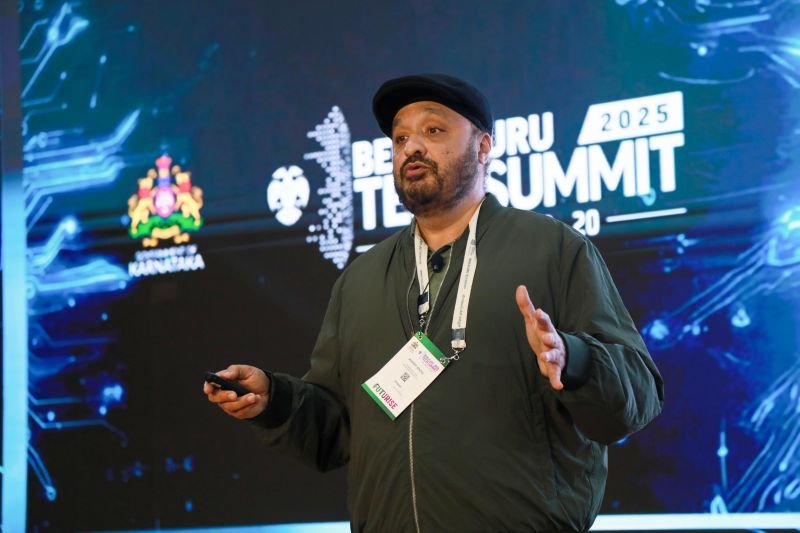
A Human Centred Paradigm for AI Leadership
Jaspreet Bindra argued that India has the scale and momentum to lead the world in AI but that leadership must emerge from a people first foundation. Rather than competing only on compute power or mega tech infrastructure, he proposed a “third way” where India’s strength lies in democratised AI literacy — enabling every citizen to understand, apply and engage with AI meaningfully.
He emphasised that AI literacy is not a luxury but a national capability. When 1.4 billion people can confidently navigate AI tools, understand risks and opportunities, and apply AI in daily life and work, the country gains a unique competitive advantage that few nations can replicate.
Scalable Learning Models for a Billion Plus Citizens
The session outlined practical pathways to achieve AI literacy at scale:
-
Foundational education that introduces AI concepts in schools and colleges in simple, relatable ways
-
Targeted skilling programs for the workforce through public private collaboration
-
Regional language learning models to ensure no demographic or geography is excluded
-
Community based enablement using local institutions to cascade learning in accessible formats
-
Industry led micro certification models that empower individuals to upskill swiftly
Bindra stressed that literacy does not mean turning every citizen into a data scientist. Instead it means enabling people to use AI safely, intelligently and confidently in their own domains.
Responsible and Ethical Adoption Frameworks
A recurring theme in the keynote was the need for India to build responsible guardrails as adoption accelerates. Bindra highlighted frameworks built around:
-
Transparency in AI applications
-
Safety and security for citizens
-
Minimising risk and preventing misuse
-
Ensuring AI serves society rather than displacing opportunity
He noted that India’s regulatory approach must balance innovation with accountability, ensuring the country can scale AI without compromising trust.
India’s Moment to Lead Through Inclusion
The keynote resonated strongly with the summit’s broader theme of Futurise. Bindra’s core argument was simple yet powerful: India can lead globally not by replicating the models of dominant AI nations but by charting an inclusive path where people are the primary drivers of progress.
If India succeeds in making AI literacy ubiquitous, he said, it will unlock a societal capability unmatched anywhere in the world. Farmers, teachers, small business owners, healthcare workers, students, and senior citizens alike would be empowered to use AI in practical, value creating ways.
A Vision Rooted in Possibility
As the session concluded, the audience was left with a clear message. India’s greatest AI advantage is its people. By investing in literacy, capability building and ethical adoption frameworks, the country has an opportunity to create a citizen powered AI revolution with global impact.
Bindra’s session at the Bengaluru Tech Summit served not only as a call to action but as a confident reminder that India’s AI future can be shaped through a path defined by inclusion, innovation and human potential.