

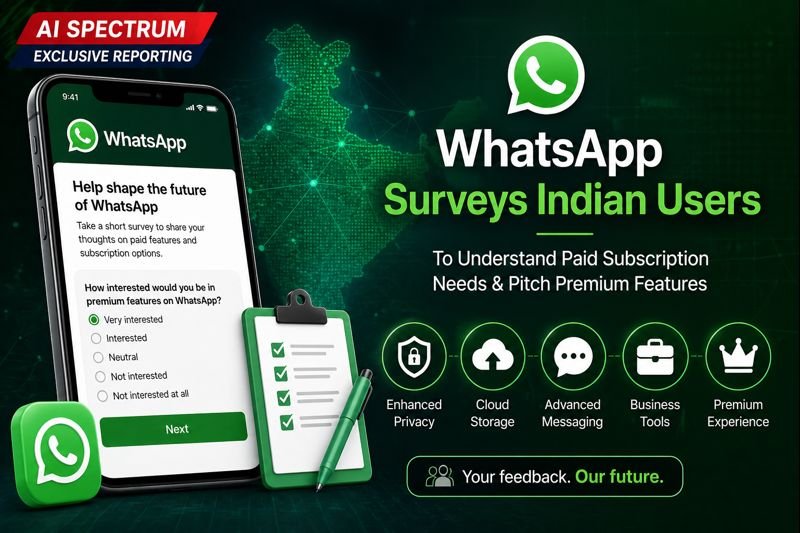
Meta Platforms Inc. has initiated a structured user survey across India to evaluate demand for potential paid features on WhatsApp, signalling a strategic shift toward subscription-led offerings in one of its most critical growth markets.
The survey is designed to capture user sentiment, willingness to pay, and expectations from premium services that could extend beyond the platform’s current free-to-use model. India, with its vast and highly engaged user base, is expected to play a defining role in shaping the roadmap for any future monetisation strategy.
According to early indications, the survey explores user interest across a range of potential premium features, including enhanced privacy controls, advanced cloud storage, exclusive communication tools, business integrations, and ad-free experiences. The initiative also seeks to understand pricing sensitivity and preferred subscription formats, including monthly and bundled service options.
A spokesperson from Meta Platforms Inc. noted that the exercise is part of an ongoing effort to evolve user experience while maintaining accessibility. “We continuously explore ways to improve value for our users. This survey helps us understand how users perceive additional features and what they would find meaningful in a premium offering.”
Industry observers view this move as a calibrated step towards diversifying revenue streams beyond business messaging and advertising integrations. With increasing competition in the digital communication ecosystem and rising demand for privacy-centric services, subscription models are emerging as a viable pathway for sustained growth.
India’s digital maturity, combined with its price-sensitive yet feature-driven consumer base, presents both an opportunity and a challenge. Any paid offering will need to strike a careful balance between affordability and differentiated value to achieve meaningful adoption.
While WhatsApp has not formally announced a rollout timeline for paid subscriptions, the survey marks a clear intent to test the waters and co-create future offerings based on user insight.
The development underscores a broader industry trend where large-scale platforms are increasingly turning to hybrid monetisation models—blending free access with optional premium tiers—to deepen engagement and unlock new revenue channels.