
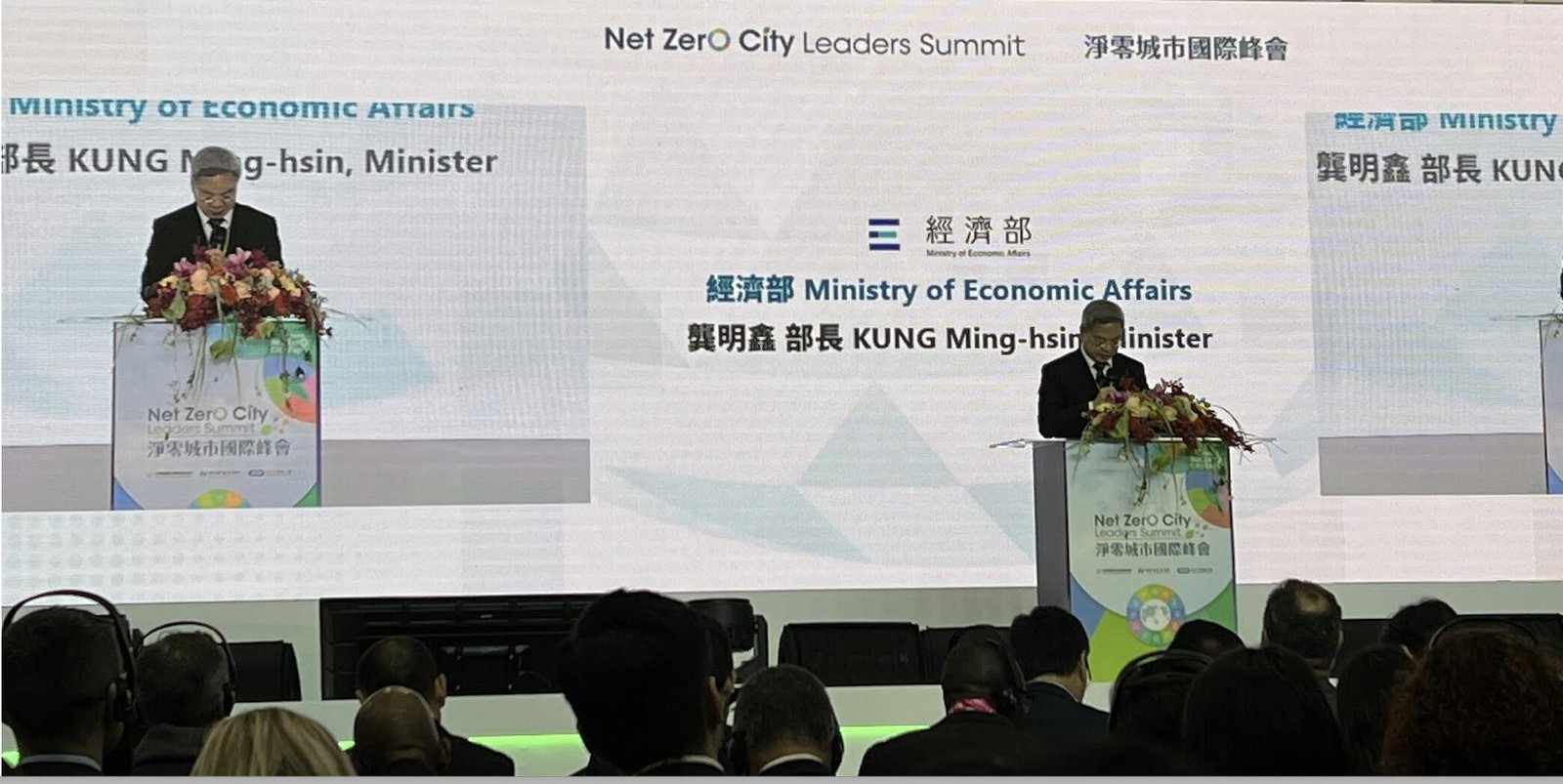
At the Net Zero Leaders Summit, held alongside the Smart City Summit & Expo (SCSE), Kung Ming-hsin, Minister of Economic Affairs, Taiwan, outlined the nation’s strategic roadmap to accelerate industrial decarbonisation while sustaining long term economic growth.
Addressing global policymakers, industry leaders, and sustainability experts, Minister Kung emphasised that Taiwan’s transition to net zero is not solely an environmental imperative, but a structural economic transformation driven by innovation, industrial upgrading, and cross sector collaboration.
He highlighted that Taiwan is actively advancing a dual pathway of green transformation and industrial competitiveness, ensuring that decarbonisation efforts are closely aligned with economic resilience and global market positioning.
“Net zero is not a constraint on growth, it is a catalyst for the next phase of industrial development,” Kung stated, underscoring the role of technology in enabling sustainable manufacturing and supply chain transformation.
A key focus of his address was the acceleration of low carbon industrial systems, including energy efficiency improvements, renewable energy integration, and the adoption of advanced manufacturing technologies. He noted that Taiwan is strengthening its position across semiconductors, advanced electronics, and high value manufacturing, while embedding sustainability across these sectors.
Minister Kung also pointed to the importance of cross sector collaboration, bringing together government, industry, academia, and international partners to co develop scalable solutions. He highlighted ongoing initiatives that support circular economy models, green energy deployment, and digital transformation, enabling industries to reduce emissions while improving operational efficiency.
In the context of global supply chains, he stressed that sustainability is increasingly becoming a key requirement for international competitiveness.
“Industries that can demonstrate low carbon operations and transparent supply chains will lead the next wave of global trade,” he noted.
The Minister further emphasised the role of smart technologies and AI driven systems in achieving net zero targets, particularly in optimising energy usage, monitoring emissions, and enhancing resource efficiency at scale.
He also underscored Taiwan’s commitment to working with international partners, particularly across Asia, to share best practices and support regional decarbonisation efforts.
“Taiwan is ready to collaborate globally to build resilient, low carbon economies,” Kung said, highlighting opportunities for knowledge exchange and joint innovation.
His address reinforced Taiwan’s position as a forward looking economy that is integrating sustainability with technological leadership, while actively shaping the global transition towards net zero.
The Net Zero Leaders Summit forms a key pillar of the broader Smart City Expo, bringing together stakeholders to explore how policy, technology, and industry collaboration can accelerate the transition to sustainable and intelligent urban ecosystems.