
NVIDIA has announced expanded collaborations with South Korean conglomerates LG Group and SK Group to accelerate the development of AI infrastructure, smart manufacturing, robotics, autonomous systems, and sovereign AI services.
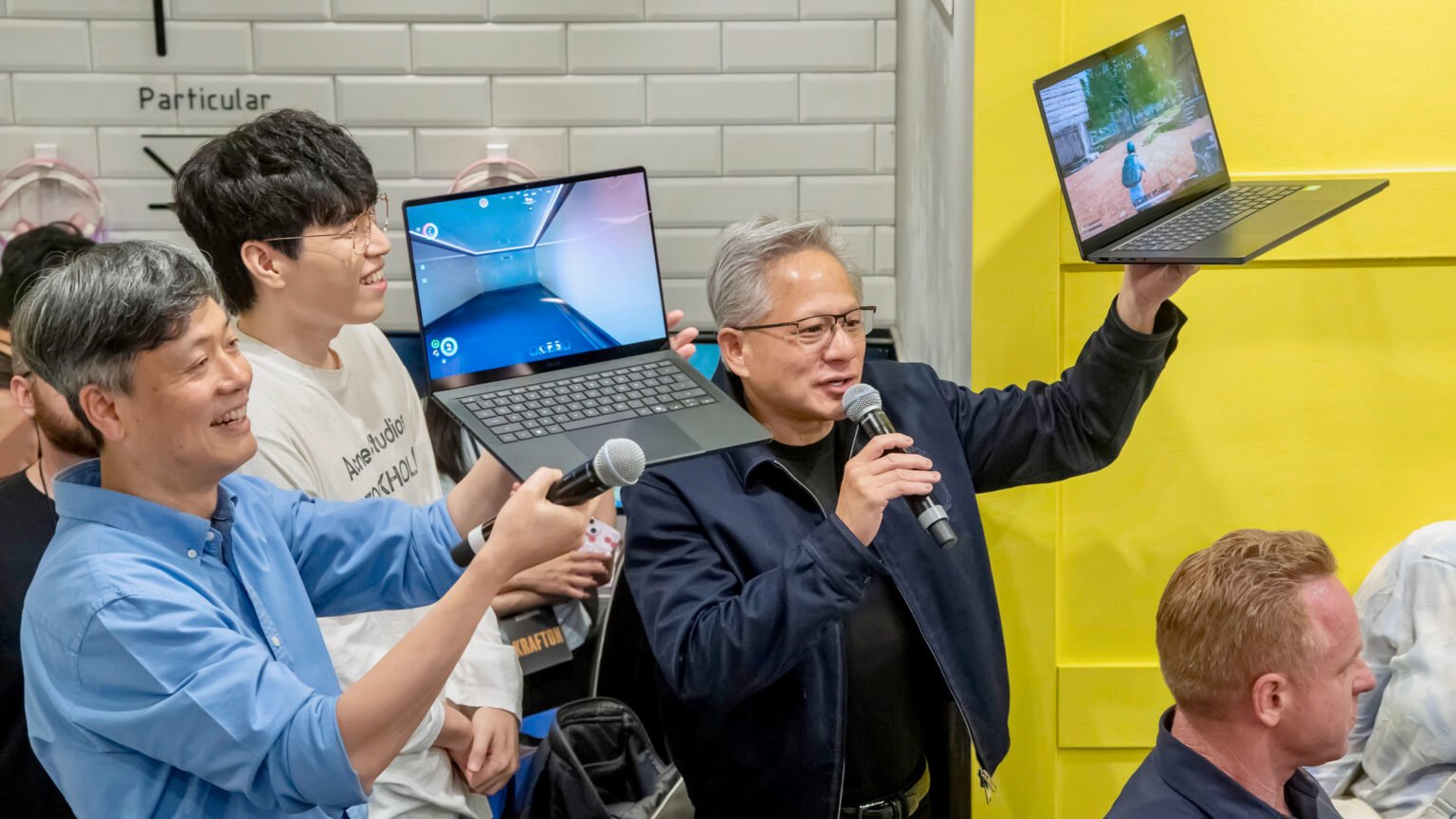
The announcement follows a meeting between NVIDIA Founder and CEO Jensen Huang and LG Group Chairman Koo Kwang-mo in Korea, where the companies outlined plans to build an AI factory that will support LG’s robotics, autonomous driving technologies, data centre solutions, and GPU cloud services.
As part of the collaboration, LG will combine production technology expertise and operational data from its global manufacturing facilities with NVIDIA’s AI infrastructure, accelerated computing platforms, and digital twin technologies. The companies aim to create an autonomous manufacturing ecosystem that connects every stage of the production process from raw material procurement and manufacturing to logistics and customer delivery through real-time data and AI.
The initiative is expected to strengthen AI-driven manufacturing capabilities and establish a new benchmark for global smart factory operations.
NVIDIA also announced an expanded partnership with SK Group focused on advancing AI infrastructure and next-generation computing platforms. Speaking in Seoul alongside SK Group Chairman Chey Tae-won, Huang highlighted a new multiyear collaboration to co-develop advanced memory technologies for four NVIDIA platforms spanning AI infrastructure, personal AI, and physical AI applications.
The partnership extends to large-scale AI infrastructure development. Under the agreement, SK Telecom plans to build a gigawatt-scale AI cloud platform in Korea using NVIDIA’s DSX platform. The infrastructure will support sovereign AI initiatives, agentic AI services, and physical AI applications across industries.
The announcements underscore NVIDIA’s growing role in enabling national AI ecosystems and industrial AI transformation, as organisations increasingly invest in advanced computing infrastructure to support next-generation AI workloads, autonomous systems, and digital manufacturing.