

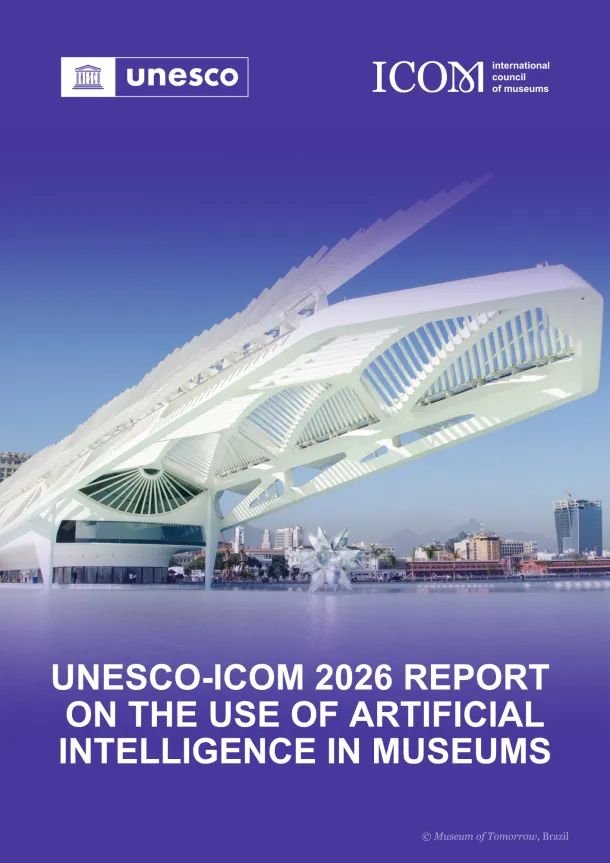
More than half of museums surveyed globally are already using artificial intelligence (AI), but a similar proportion lack internal policies or guidelines governing its use, according to the first UNESCO–International Council of Museums (ICOM) Global Survey on the Use of AI in Museums.
The findings, presented at the Global Forum on the Ethics of Artificial Intelligence (GFEAI) 2026 in Riyadh, show that 57 per cent of responding museums are using AI, while 55 per cent have no internal AI policy, strategy or guidelines.
The survey covered more than 400 museums across 90 countries and highlights a growing gap between experimentation with AI and institutional capacity to govern its deployment.
According to UNESCO, museums are increasingly exploring AI across a range of activities, including administration, translation, collections research, documentation, exhibition development and visitor engagement. However, adoption remains largely exploratory or driven by individual staff members rather than being implemented as an institution-wide strategy.
The survey identified accuracy, copyright and data protection among the leading concerns for museums using AI. Respondents also highlighted the need for greater training and guidance on the technical and ethical use of AI, data governance and intellectual property rights.
The findings also point to disparities in museums’ ability to adopt AI. Differences in digital infrastructure, funding, technical expertise and access to specialised knowledge mean that institutions have varying capacities to experiment with and implement AI technologies.
UNESCO said it will continue supporting museums in developing the skills, policies and ethical frameworks needed to make informed decisions about where and how AI can contribute to their cultural, educational and social missions.
The survey findings were accompanied at the Riyadh forum by testimonials on AI use from museums in Brazil, Egypt and Kenya, providing examples of how institutions in different regions are approaching the technology.
ICOM also highlighted its recently revised Code of Ethics, which explicitly addresses digital technologies. The organisation said it aims to ensure that museum values and professional expertise contribute to the responsible development and use of AI.
The global survey provides an overview of an evolving AI landscape in the museum sector, with institutions increasingly testing AI applications while developing approaches to address questions around ethics, trust, accuracy and professional responsibility.