
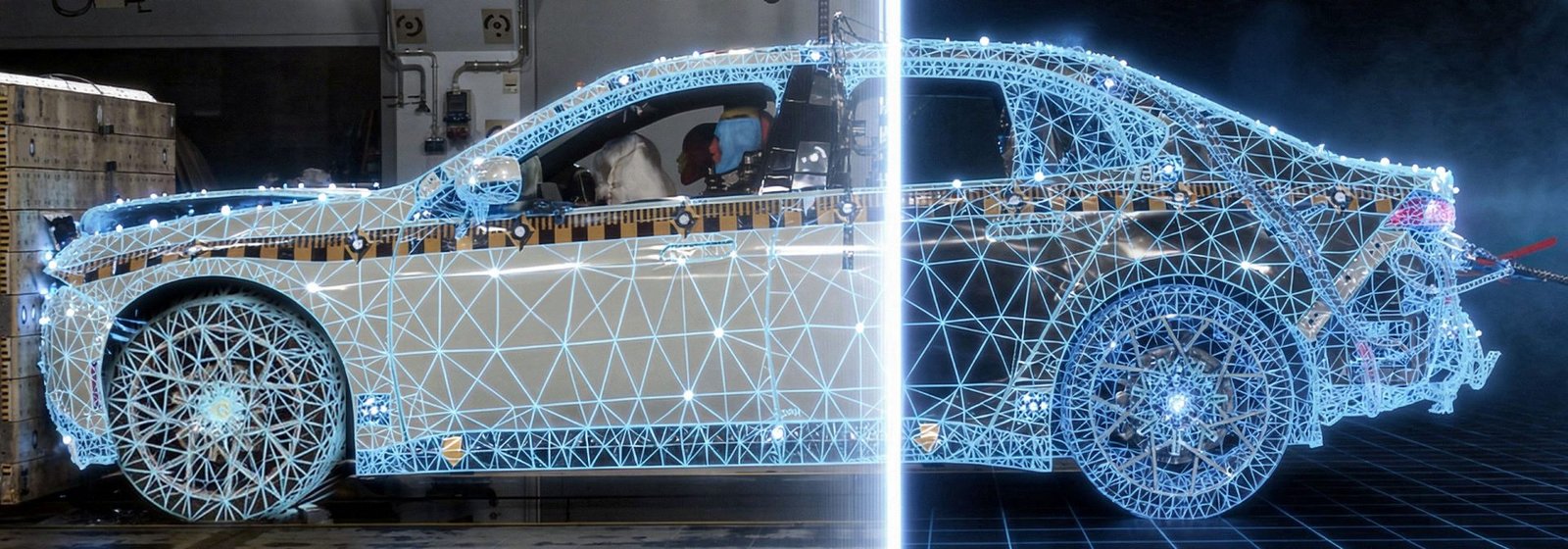
The BMW Group is advancing the use of artificial intelligence in automotive engineering by developing industry-specific AI models designed to support complex vehicle development and crash simulation processes.
The company is combining its engineering datasets with the model training capabilities of Mistral AI to build specialised AI systems capable of assisting engineers with highly technical development tasks. Unlike general-purpose AI models, these Large Industry Models (LIMs) are trained on industry-specific engineering and simulation data, enabling them to deliver domain expertise tailored to automotive engineering.
According to Dr. Franz Decker, CIO and Senior Vice President at the BMW Group, the collaboration is aimed at creating AI models that can better support engineering workflows. “By combining our engineering datasets with Mistral AI's model training capabilities, we are building a specialised AI that supports complex development tasks,” he said.
The Large Industry Models are designed to go beyond the capabilities of conventional AI by incorporating knowledge of engineering principles, simulation methodologies and industrial processes directly into the models. This enables them to analyse complex technical data and provide insights relevant to vehicle design and validation.
One of the primary applications is crash simulation, where engineers evaluate how vehicles perform under different impact scenarios. These simulations require detailed analysis of physics, material properties and structural behaviour. The specialised AI models can help identify how energy is absorbed throughout the vehicle structure, assess material performance under stress and flag anomalies that may require further engineering investigation.
By integrating domain-specific AI into its engineering workflows, BMW aims to accelerate product development while improving the efficiency and accuracy of simulation-driven design. The initiative reflects a broader trend across the automotive industry, where manufacturers are increasingly adopting specialised AI models to complement engineering expertise and support next-generation vehicle development.