

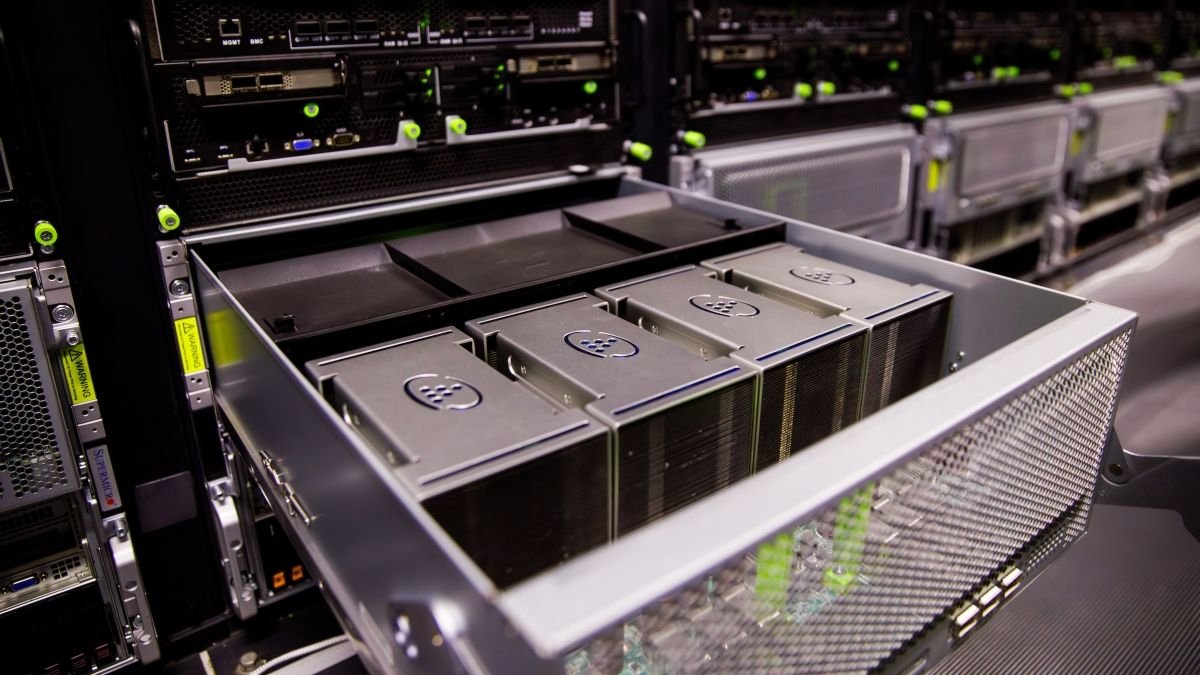
Arizona State University is expanding its artificial intelligence research capabilities following a multimillion-dollar technology donation from Intel.
The donation, part of ASU's Changing Futures campaign to advance technology for good, supports a larger university priority to strengthen national competitiveness in AI and expand access to high-performance computing for researchers and students.
The sizable hardware donation significantly increases the scale and flexibility of AI workloads that ASU researchers can pursue, supporting larger, more complex projects across disciplines.
“At ASU, this powerful and transformative technology must be accessible,” President Michael Crow said. “Lowering the barriers to entry and encouraging researchers and students to use AI will further the pursuit of innovative solutions to our greatest challenges in society. This collaboration with Intel reflects our shared commitment to the principled application of AI to further research and advance education."
Intel and ASU have formed a long-standing partnership to address the U.S. semiconductor workforce shortage, critical to economic competitiveness. The collaboration supports graduate and undergraduate research, educator training, curriculum development and experiential learning through industry mentorship, equipment donations and simulation tools.
By building an integrated talent pipeline from K–12 through higher education, the alliance demonstrates how coordinated industry–academic efforts can scale workforce solutions in advanced technology fields.
The new hardware underpins the ASU AI Research Acceleration Platform, or AIR Platform, a university-wide initiative aimed at removing barriers to advanced computing and broadening AI adoption and literacy among researchers. Led by ASU Knowledge Enterprise, the AIR Platform is a secure, open-access framework that pairs Intel’s hardware donation with ASU’s existing globally ranked Sol supercomputer.
“The AIR Platform isn’t just infrastructure — it’s a coordinated, programmatic capability that lowers the barrier to advanced AI methods across disciplines,” said Sally C. Morton, executive vice president of ASU Knowledge Enterprise. “By making these tools accessible and integrated into research workflows, we enable faculty and students to move faster from idea to insight. That’s core to Knowledge Enterprise: accelerating discovery and translating it into tangible impact at scale.”