

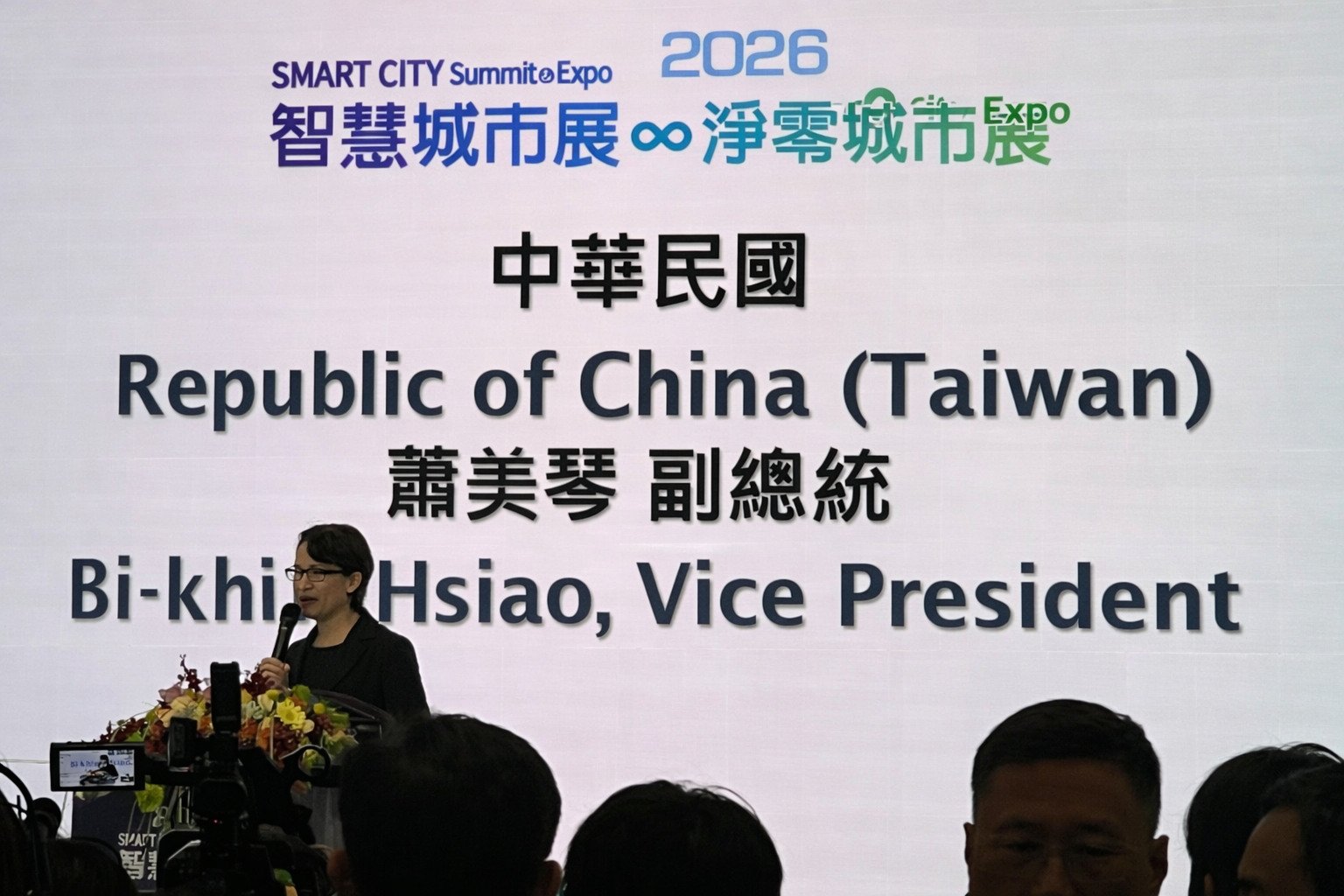
The inauguration ceremony commenced with a welcome address by Samson Hu, Co CEO of ASUS and Chairman of the Taiwan Smart City Solutions Alliance, who greeted the Vice President, distinguished dignitaries, global delegates, and industry leaders from across 53 countries and regions.
In his opening remarks, Hu highlighted the growing global significance of the summit, noting that participation from 174 cities and thousands of international professionals reflects a shared urgency to address urban challenges through technology and collaboration.
“This platform brings together governments, enterprises, and innovators to move beyond ideas and deliver working solutions for cities,” Hu stated. “Taiwan is committed to building an open ecosystem where AI, infrastructure, and sustainability converge to create real impact.”
Welcoming Vice President Hsiao, Hu emphasised Taiwan’s progress in advancing AI driven smart city frameworks, including sovereign AI and digital twin systems, while reinforcing the country’s ambition to scale these solutions globally.
He noted that Taiwan’s integrated approach combining technology innovation and practical deployment is increasingly being recognised as a model for cities worldwide, particularly in Asia.
Following the welcome address, Vice President Hsiao formally inaugurated the summit and delivered her keynote, positioning the event as a reflection of Taiwan’s ability to translate policy vision into real world implementation through strong collaboration between government, industry, and academia.
She emphasised that the convergence of artificial intelligence and sustainability is central to shaping future cities, aligning closely with Taiwan’s 2050 Net Zero Emissions roadmap and its broader ambition to build resilient, inclusive, and intelligent urban ecosystems.
“Smart city development today is about delivering real impact to citizens,” she noted, highlighting the importance of integrating digital technologies into essential public services such as transportation, healthcare, public safety, and urban mobility.
Vice President Hsiao underscored that Taiwan is not only advancing its domestic capabilities but also positioning itself as a global partner for smart city solutions, particularly for rapidly urbanising and developing economies seeking scalable and practical models.
She highlighted that Taiwan’s approach focuses on deployable solutions rather than isolated innovation, enabling cities to adopt technologies that improve governance efficiency, enhance service delivery, and strengthen resilience against future challenges.
The inauguration also reflected Taiwan’s growing international engagement, with participation from 174 cities across 53 countries and regions, alongside the presence of global institutions and first time country pavilions, reinforcing Taiwan’s role as a convening platform for international collaboration.
Concluding the ceremony, Vice President Hsiao reaffirmed Taiwan’s long term vision to work closely with global partners in co creating smarter, more sustainable cities.
The inauguration sets the tone for a week of dialogue, innovation, and partnership, as Taiwan continues to strengthen its position at the forefront of AI driven and net zero urban transformation.