

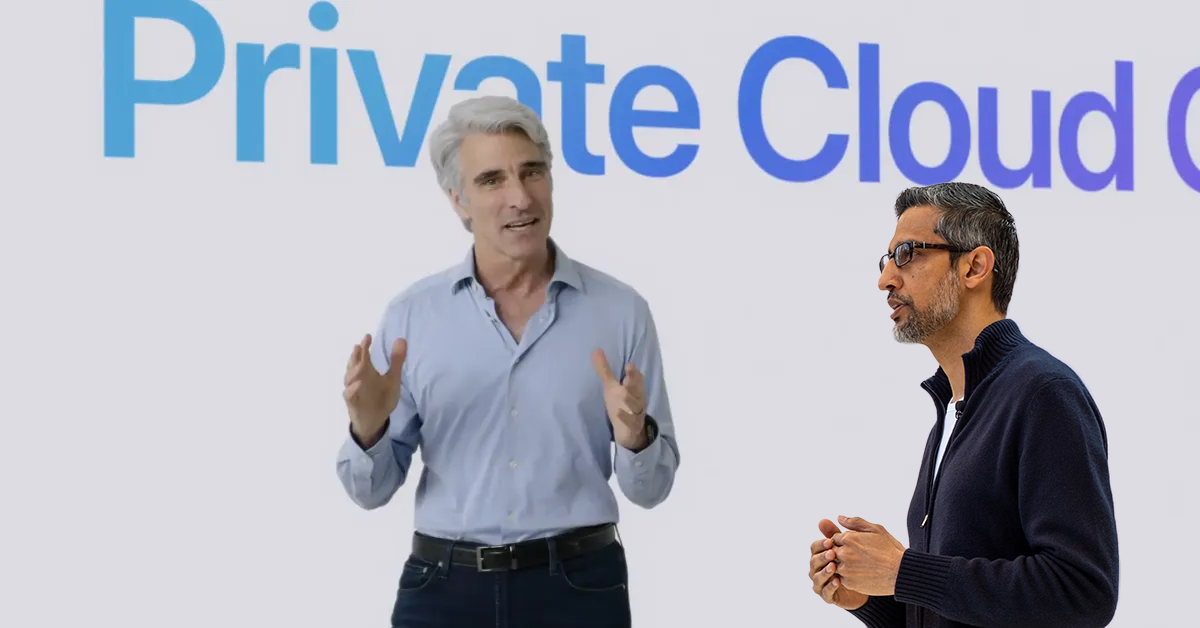
Google has launched Private AI Compute, a new cloud-based processing system designed to enhance the privacy of on-device AI in the cloud. The platform intends to provide users with faster, and more skillful AI experiences without ever compromising data security. It integrated Google’s most advanced LLM, which is Gemini models with strict privacy safeguards, demonstrating the company’s ongoing effort to make AI both powerful and responsible.
This feature is similar to Apple’s Private Cloud Compute, showing how the major tech firms are rethinking privacy in the era of powerful AI. Both Google and Apple are trying to find the right balance between the huge computing power needed to run huge AI models and users’ growing expectations for data privacy.
What inspired Google to build Private AI Compute
As AI systems get smarter, it is also getting more personal. What started as tools that used to complete simple tasks or used to answer direct questions are now turned into systems that can predict user needs, suggest actions, and also handle complex processes in real time. This kind of intelligence requires a lot of computing power, often more than a single device can handle.
Private AI Compute fills that gap. It let Gemini models in the cloud and AI can process data faster and more efficiently while keeping the sensitive information private as well as secure, so that not even Google engineers can access it. The integration of cloud AI's capabilities and the confidentiality of local computing is how Google states it.
That is to say, you might experience faster answer times, better advice, and more tailored results but still the data that pertains to you will remain under your control.
How Google Protects Your Data with Private AI Compute
Google is claiming that the new platform is based on the same principles that are under its broader AI ethics and privacy strategy: giving users more control, maintain the security, and earn trust. The system acts as a protected compute environment, isolates data so that it can be executed safely and privately.
It uses a multi-layered design built on three key main components:
- Unified Google tech stack: Private AI Compute runs fully on Google’s own infra, being powered by custom Tensor Processing Units (TPUs). It’s protected through Titanium Intelligence Enclaves (TIE), which adds an additional layer of security for data processed in the cloud.
- Encrypted connections: Before data is sent for processing, a remote confirmation and encryption are verified to ensure that it’s connecting to a trusted, hardware-secured environment. Once inside this protected cloud space, the information stays private and accessible only to the user.
- Zero access assurance: Google designed the system so that no one; not even Google's own team can see or access the data handled by the Private AI Compute.
The design is based on Google’s Secure AI Framework (SAIF), AI Principles, and Privacy Principles, which are the core guidelines for the company’s responsible AI development and deployment.
The User Expectations
Private AI Compute not only enhances the performance of AI features that are already supported on devices but also it is the case. A case in point is the Magic Cue feature, which has been updated on the Pixel 10 to provide particularly relevant as well as up-to-date suggestions by tapping into the larger capacity of cloud processing. The same goes for the Recorder app, which can leverage the system in creating transcription summaries in multiple languages, something that would not be possible at the same pace if everything were to be done on the device alone.
The mentioned illustrations reveal a small part of the future developments. Through the Private AI Compute, Google is bringing together the confidentiality of the on-device AI and the strength and intelligence of the cloud. This strategy could influence the future not only of personal assistants and photo organization but also of productivity and accessibility tools.
Google claims that this is “only the beginning.” The firm considers Private AI Compute to be the first step towards the evolution of an AI generation that is both more intelligent and more private. People demand more information and power over their data as AI grows to become a significant aspect of their daily activities — and Google appears to be equipped with this new technology to fulfill that demand.
If you are interested in the technical aspects, Google has released a technical brief outlining the operation of Private AI Compute and its integration into the company's overall vision of responsible AIdevelopment.
Technical blog from Google ?
[ https://blog.google/technology/ai/google-private-ai-compute/ ]