

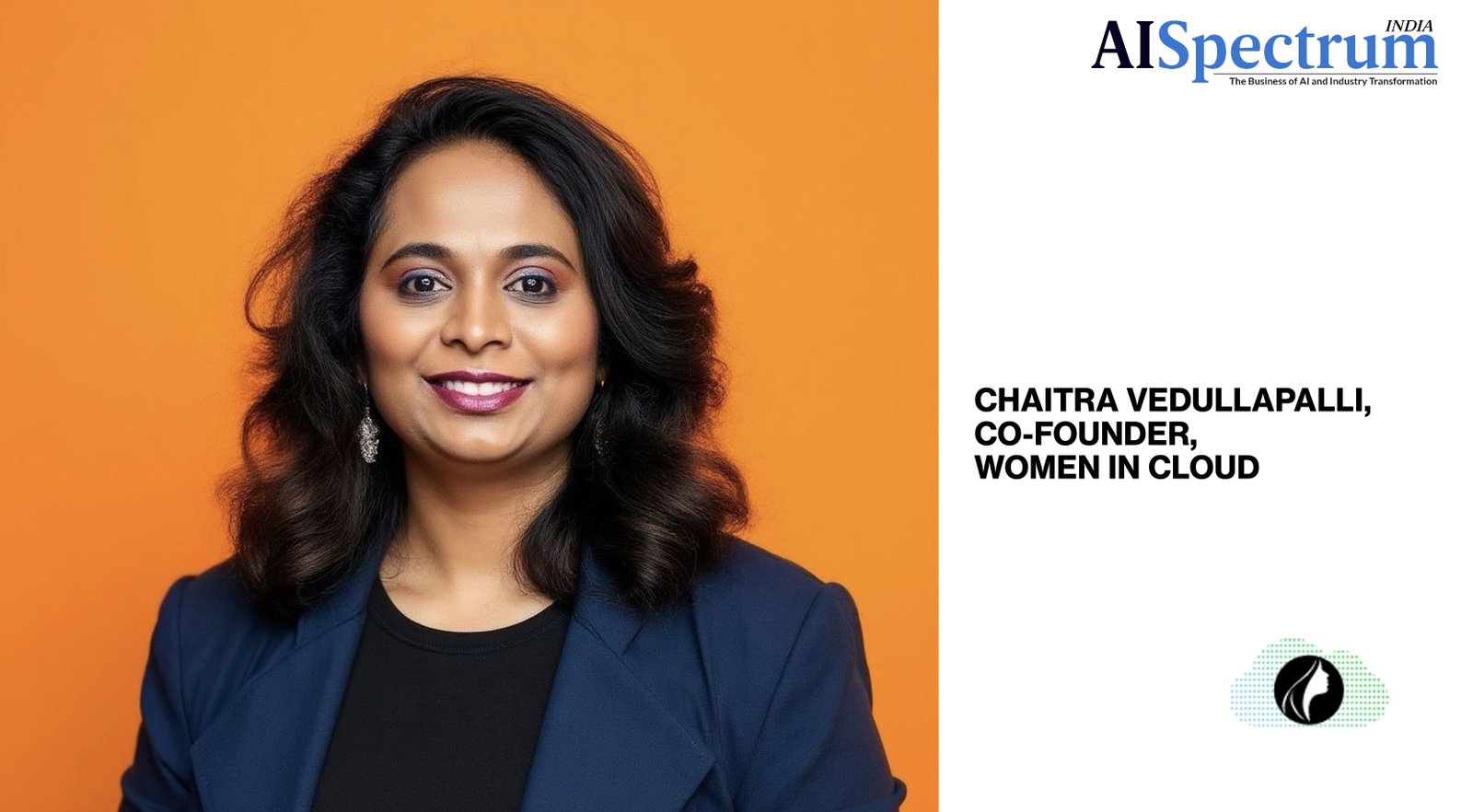
How did the idea for OPULIS emerge, and what significance does it hold in capturing the leadership stories that shaped Microsoft’s journey while inspiring the next generation of innovators?
CV: It began with a question that kept me up one night after watching a documentary: How will history remember the women who built Microsoft’s future?
As the company’s 50th anniversary approached, I realized we had an opportunity and an obligation to contribute something meaningful. Microsoft wasn’t just another corporate partner to us; it was the foundation sponsor that helped give birth to Women in Cloud, the platform that allowed us to dream in billions: billions in access, innovation, in possibility. They had given us the tools to build, and now it was our turn to give something back.
So, we approached Microsoft’s leadership with a simple idea: “What if we honored the past, celebrated the present, and ignited the AI future?”
The idea resonated instantly. To all of us, OPULIS is a celebration of significance, scholarship, and shared leadership, a blueprint for how we honor the past, celebrate the present, and ignite the AI-powered future together.
We created OPULIS to:
- Celebrate significance — honoring the hidden figures and allies whose contributions powered Microsoft’s trillion-dollar shift.
- Ignite 1,000 AI careers — through our Books-to-Scholarships model, where every 10 copies purchased fund one AI scholarship for deserving talent.
- Archive legacy — preserving these stories in the Microsoft Archives as a permanent blueprint for inclusive leadership and innovation for the next 50 years.
OPULIS is a timeless creation — much like the manuscripts preserved in museums. That’s exactly what OPULIS represents to me: a landmark publication chronicling the lives of 50 pioneering women whose ideas, innovations, and advocacy guided Microsoft through the cloud and AI revolutions. And more than that, it’s about ensuring that when the next generation looks back, they’ll know exactly who built the future they’re now living in.
Women in Cloud has championed the democratization of economic access for entrepreneurs worldwide. In your view, what does equitable AI access look like, and how can public-private collaborations accelerate it?
CV: Equitable AI access means ensuring that talent not privilege, determines who participates and prospers in the AI-powered economy. At Women in Cloud, we see equitable access as an economic imperative. It’s about creating systems where everyone regardless of gender, geography, or income can safely and meaningfully engage with technology that shapes their future. Our approach begins with consumer protections and digital rights ensuring that automation and AI-driven decision-making systems are transparent, fair, and free from bias. We believe the democratization of AI must protect individuals’ data, identity, and opportunity to innovate, not just optimize productivity.
From an economic opportunity perspective, equitable access means designing pathways that allow underrepresented entrepreneurs and professionals to gain AI and Cyber credentials, hands-on experience, and access to digital marketplaces where their innovations can thrive. Through public-private collaborations with Microsoft, Accenture, and EY, we’ve built an ecosystem that combines AI scholarships, go-to-market acceleration programs, and inclusive innovation challenges. These initiatives equip individuals to build sustainable businesses and access global markets while contributing to responsible automation.
At the intersection of automation and human potential, we focus on preparedness, arming people with the skills and ethical frameworks to guide how AI is deployed for public good. By doing so, we transform automation from a job threat into a productivity amplifier that fuels economic stability, civil participation, and shared prosperity. Ultimately, equitable AI access isn’t just about teaching people to use technology it’s about ensuring they have a voice in shaping it, a stake in benefiting from it, and a community to innovate within it.
Having unlocked over $500 million in economic opportunities for 120,000 individuals across 80+ countries is extraordinary. What lessons have you learned from scaling impact globally, and what new frontiers are you targeting next?
CV: The greatest lesson we’ve learned is that impact scales through partnership that funds programs and it begins with individual transformation before system transformation. Sustainable change happens when organizations are empowered to co-design and co-launch solutions, rather than simply adopt them.
At Women in Cloud, we’ve discovered that every innovation capable of democratizing access must be built with three principles:
- Co-design and co-launch as the foundation of innovation ensuring communities have ownership in shaping what they use.
- Decision-making frameworks that prioritize inclusivity, transparency, and measurable economic advancement.
- Accessible lifelong learning programs that meet people where they are, at any age, stage, or skill level and provide clear pathways toward economic prosperity.
We’ve also learned that assets like movies, books, and awards play a critical role in inspiring participation. Storytelling creates emotional access the bridge between awareness and action allowing people to see themselves as creators, not consumers, in the digital economy. Our next frontier is to scale AI preparedness and economic stability through the $1 Billion Economic Access Initiative, expanding our Books-to-Scholarships model and building a Global AI Talent Marketplace. This ecosystem will connect certified AI innovators to enterprise opportunities worldwide—ensuring equitable participation, inclusive innovation, and shared prosperity across borders.
As one of the youngest directors in Oracle’s history and now a global advocate for women entrepreneurs, how has your own leadership philosophy evolved — and what advice would you give to emerging leaders navigating AI-led transformation?
CV: Leadership today is no longer about control it’s about curation of access. My philosophy has evolved from driving results as an individual contributor to engineering ecosystems where others can thrive, innovate, and lead.
In the age of AI, leaders must blend technical fluency with emotional intelligence and purpose understanding not just how technology works, but how it shapes human progress.
My three core pieces of advice for emerging leaders are:
- Master executive alignment and communication. It’s one of the most undervalued leadership skills, yet the most essential for accelerating innovation and trust across teams and partners.
- Adopt a zero-funding mindset. Innovation starts with creativity, not just capital. Build with what you have, prove the concept, and let momentum attract investment. Resourcefulness breeds resilience.
- Create bold visions, then implement them in quarters. Big dreams become achievable when translated into disciplined, quarterly execution cycles that sustain energy and focus.
Ultimately, in an AI-led world, your mindset is your most powerful machine so lead with clarity of impact, invest in relationships that multiply access, and design systems that enable others to rise with you.
Partnerships have been at the heart of Women in Cloud’s success. How does the ongoing collaboration with Microsoft — particularly through initiatives like OPULIS — redefine what inclusive innovation ecosystems can achieve?
CV: The Microsoft–Women in Cloud partnership is a blueprint for WIN-WIN collaboration one that democratizes technology, amplifies access, and drives measurable business outcomes for all participants. Together, we’ve evolved beyond sponsorship and mentorship into co-creation and co-launch, where innovation is distributed, not centralized. Through initiatives like OPULIS, we’ve proven that inclusion fuels innovation and visibility creates value. OPULIS is more than a book—it’s an economic access engine that transforms stories of leadership into scholarships, certifications, and enterprise partnerships. It redefines how storytelling, technology, and market distribution can converge to fund the future.
At the heart of this partnership lies a shared belief: equitable ecosystems require distribution and visibility as much as innovation. Our co-launched GTM models focus on expanding reach through digital marketplaces, licensing frameworks, and co-branded campaigns that give entrepreneurs a clear pathway from idea to revenue. The result is an ecosystem where corporate and community partners grow together aligning brand legacy with social capital, enabling scalable impact, and proving that when technology is democratized, prosperity becomes collective.
As technology becomes more personal and pervasive, how do you envision inclusive innovation shaping the next decade of business and social change? What are the key mindset shifts required at the policy, industry, and community levels?
CV: The next decade will be defined by responsible access where AI and automation enhance human well-being, protect rights, and create equitable economic participation. To achieve this, we must embrace a WIN-WIN mindset, where democratization of technology fuels shared prosperity rather than selective advantage. At the policy level, consumer protections and economic access must go hand in hand. Policymakers need to establish accountability frameworks that safeguard individual rights while enabling entrepreneurship and innovation. AI governance must balance ethics with opportunity, ensuring technology works forpeople not the other way around.
At the industry level, communities like Women in Cloud are Go-To visibility and distribution engines for emerging and existing technologies. They accelerate adoption through co-launches, public-private partnerships, and storytelling that transforms innovation into inclusion. The next frontier is to measure success not just by revenue but by reach, representation, and readiness.
At the community level, we must build licensable assets movies, books, courses, and IP models that sustain innovation for the long term. This requires leaders to think beyond short-term gains and engage deeply within ecosystems that nurture trust, respect, and outcomes. As we say in our community, Kumbhaii drives trust and trust drives transformation.
Inclusive innovation, at its core, is about access and agency. When technology is co-designed, co-launched, and co-owned by diverse communities, it doesn’t just change industries it reshapes society toward shared stability, prosperity, and human dignity.
_______________________________