

The automotive industry is rapidly transitioning from hardware-centric engineering to software-defined mobility, where intelligent software platforms, AI-native architectures, and centralised computing systems are becoming the backbone of next-generation vehicles. As automakers seek to deliver continuous feature updates, advanced driver experiences, and faster innovation cycles, the role of open-source technologies and cloud-native development models is expanding across the automotive ecosystem.
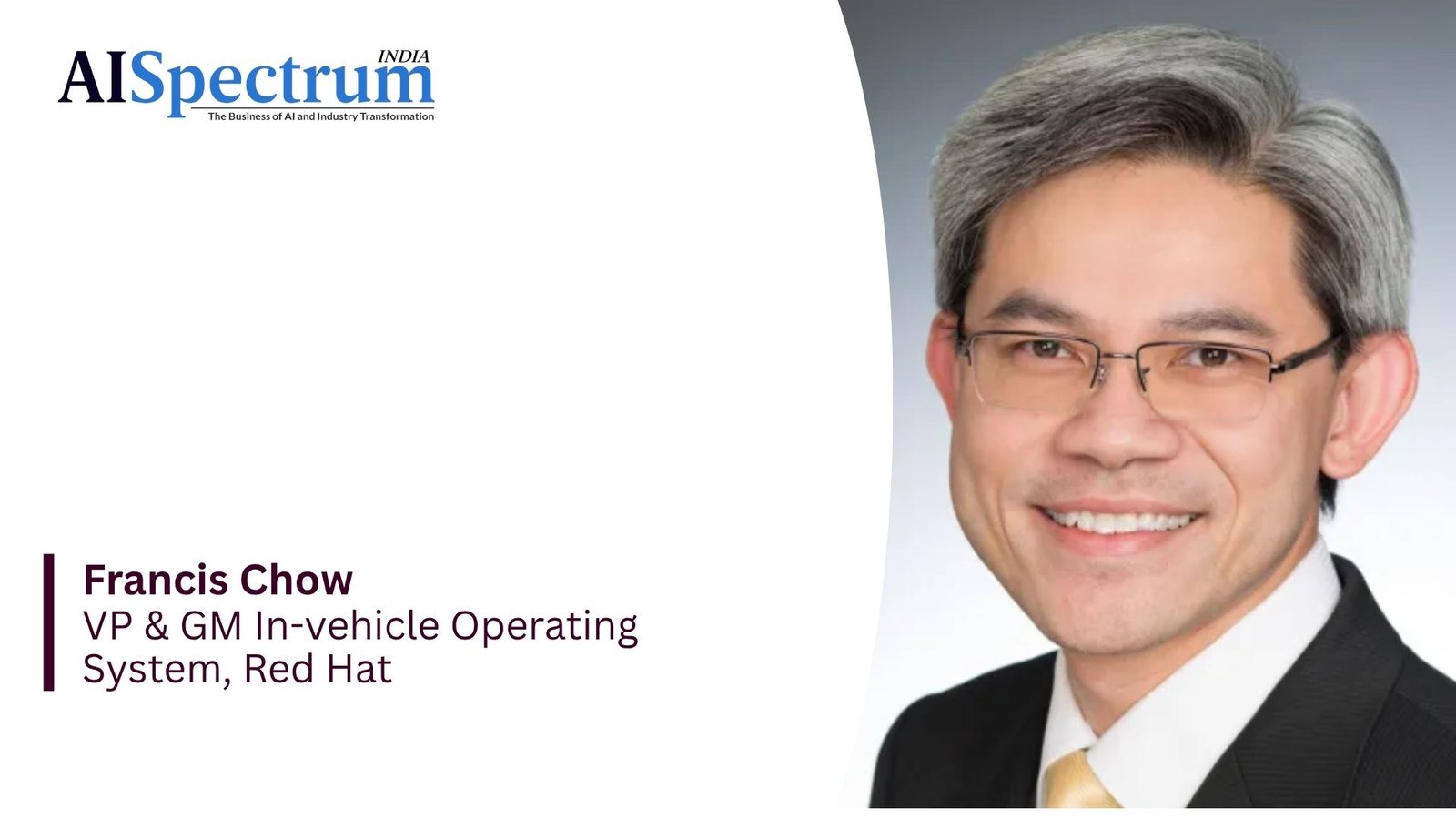
In this interview with AI Spectrum, Francis Chow, VP & GM, In-vehicle Operating System and Edge at Red Hat, discusses how Red Hat is collaborating with Nissan Motor Co. to help shape the future of software-defined vehicles through safety-certified Linux platforms and AI-ready operating systems. He shares insights into the industry’s shift toward centralised vehicle computing, the growing influence of AI across development and testing workflows, and the importance of decoupling software from hardware to accelerate innovation. Chow also explains why open-source collaboration and organisational transformation will be critical in enabling scalable, intelligent mobility for the next generation of vehicles.
What strategic factors led to this collaboration, and how does it align with the evolution toward software-defined vehicles?
One of the early factors was the migration by automakers from dozens or even 100 or more specialised Electronic Control Units (ECUs) to more powerful centralised computer engines, including that envisioned by Nissan in the next generation Central Vehicle Computer. Running multiple applications of mixed criticality on the same platform requires a reimagining of the software platform and opens the door to modern, rich operating systems such as Linux. Red Hat has been able to demonstrate that it can deliver a safety-certified Linux to level ASIL-B in the ISO 26262 specification, which lead to deeper evaluation, resulting in the decision to proceed with the joint development of future central vehicle control (CVC) implementations announced in the press release.
The initiative highlights an "AI-native" automotive architecture. What does this mean in practical terms, and how will it reshape vehicle development and performance?
Automakers and Tier 1 suppliers are increasingly employing AI in numerous use cases during development, in testing and validations, and even in deployed vehicle applications. Many AI models are built on Linux and trained with open source code. Most AI tools are optimised for Linux and will work naturally. As such, Linux is considered an AI-native platform, as opposed to legacy, proprietary RTOS platforms, which are not part of the rapidly evolving AI ecosystem.
How does Red Hat’s In-Vehicle Operating System enable Nissan to balance software agility and continuous updates with automotive safety and reliability standards?
Red Hat has specifically demonstrated, with the official ASIL-B ISO 26262 functional safety certification, that it can deliver freedom from interference (FFI) for safety applications in the vehicle. Red Hat has also pioneered the continuous safety certification approach, allowing more continuous updates of software without having to go through a 6-12 months recertification every time.
How significant is the shift of decoupling application development from hardware for accelerating innovation in automotive AI?
For any software-defined transformation that has been done before, including in the communications infrastructure and now the automotive industry, the separation of the software from the particular hardware instances is fundamental. This enables the shift-left early development of the software layers on virtual platforms, in the cloud, without waiting for new silicon or new hardware platform boards to be fully production-ready. Further, when properly architected, software layers can scale across automaker models and even across model years.
Could you elaborate on how AI will be integrated into Nissan’s software development and testing processes to improve productivity?
The capabilities of AI models are advancing at an unprecedented pace, capable of writing software, verification and validation of the software, and as part of car-to-cloud analysis of data coming back from deployed vehicles with astonishing precision, to give a few examples of use cases being explored. Note to reporter: I recommend chatting with Nissan about this directly in the roundtable as they can likely expand more.
How do you see open-source platforms influencing the future of intelligent mobility?
Embracing open source, especially working within open collaboration communities such as the Autoware Foundation, SOAFFE, COVESA and Eclipse SDV working groups, enables the rapid development of common, open source building blocks that can be standardised. This allows more engineering resources to focus on the upper differentiating layers of software. Additionally, open source models are more transparent, with proven reliability and a focus on security.
As the sector moves toward AI-defined mobility, what are the primary technical and organisational challenges in scaling software-first architectures across global production fleets?
The challenges are more organisational, rather than technical. Breaking the internal, hardware-centric, and siloed development ingrained in the legacy multi-ECU approach, each with bespoke, proprietary technologies, created an integration bottleneck that led to development cycles that are too long to compete with today’s latest innovations. Top-down buy-in is crucial. Determining what is truly differentiating and collaborating on the rest is essential, as is embracing modern, cloud and AI-native technologies and methodologies. Those who embrace this new way of working will continue to compete in the software-defined, AI-defined vehicle transformation underway.