

Artificial intelligence is transforming antibody discovery, enabling researchers to generate vast libraries of therapeutic candidates at unprecedented speed. However, as computational design capabilities accelerate, experimental validation has emerged as a critical bottleneck, often slowing the transition from promising AI-generated hits to viable drug candidates. Addressing this challenge requires innovative approaches that can rapidly screen and prioritise antibodies before committing to costly and time-intensive downstream development processes.
To help bridge this gap, Nuclera has launched its Rapid Antibody Screening Service, designed to provide fast, cost-effective experimental triage for large AI-generated antibody libraries. Leveraging cell-free protein expression and high-throughput binding assays, the service enables researchers to identify promising candidates quickly, generate high-quality datasets for machine learning models, and optimise resource allocation across discovery workflows.
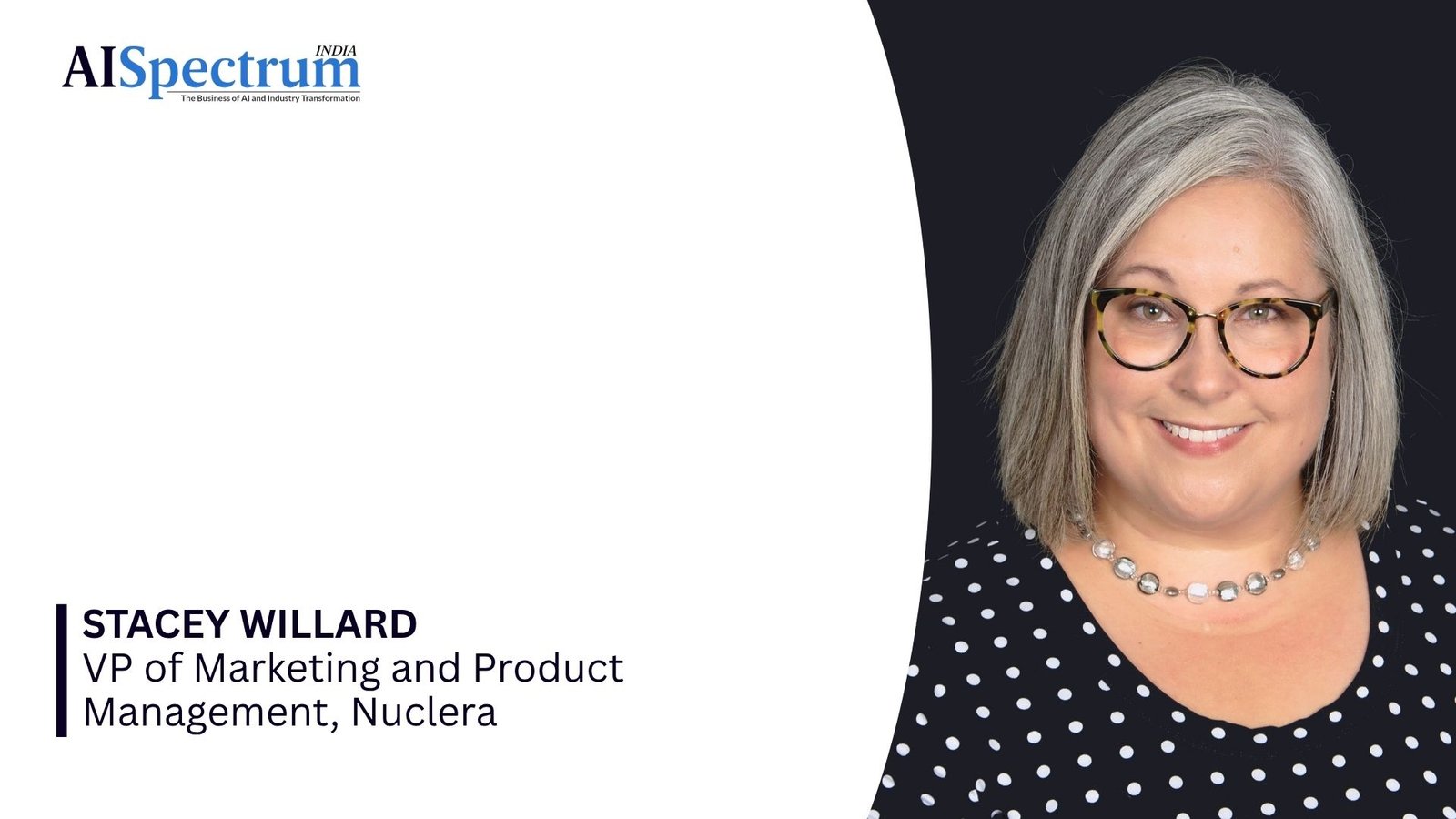
In this exclusive interview with AI Spectrum, Stacey Willard, Vice President of Marketing and Product Management at Nuclera, discusses the growing validation challenge in AI-driven antibody discovery, the role of rapid experimental screening in improving data quality and reducing development costs, and how Nuclera's latest offering aligns with the company's broader mission of accelerating access to proteins and advancing next-generation therapeutic innovation.
What specific challenges in AI-driven antibody discovery prompted the launch of this service, and how significant is this bottleneck across the biopharma industry?
AI is enabling researchers to generate antibody candidates at a scale that would have been difficult to imagine just a few years ago. The challenge is that the speed of in silico design now far exceeds the speed of experimental validation.
Teams can generate hundreds or thousands of candidate sequences, but they still need to determine which candidates express, bind their target, and warrant further investment. Mammalian expression and downstream characterisation are incredibly powerful, but they're also among the most expensive and capacity-constrained resources in the discovery workflow. The question isn't whether they're valuable, it's whether every candidate deserves to get there.
In one of our early case studies, only a small fraction of the computationally generated candidates demonstrated measurable binding, with roughly 83% triaged out for non-binding. That doesn't mean AI-designed antibodies don't work, but it does highlight the reality that generating candidates has become much easier than experimentally validating them. In that case, the time and budget spent validating those non-binders in mammalian cell culture would have been substantial. As libraries continue to grow, we need efficient ways to separate promising candidates from those unlikely to progress before committing time and resources to more expensive downstream workflows.
How does this service bridge the gap between computational hit generation and lead selection to improve the transition for large candidate libraries?
We view this service as an early experimental triage layer.
The goal is not to replace mammalian expression or detailed characterisation. Rather, it helps researchers answer some of the first critical questions: Can the antibody be expressed? Does it show binding activity? Which candidates appear most promising for further evaluation?
By generating this data earlier in the workflow, teams can make more informed decisions about where to invest time and resources. This can be particularly valuable for organisations working with large AI-generated libraries where only a subset of candidates will ultimately advance.
Could you elaborate on the 96-plex binary cell-free expression and binding assay workflow and its advantages over conventional screening approaches?
The workflow combines three primary steps, with the option for a fourth:
DNA preparation using the customer's antibody sequences
Cell-free expression of full-length antibodies
A binding assay that provides a binary readout of expression and target binding
Optional Surface Plasmon Resonance (SPR) for deeper kinetic analysis
By eliminating the need for mammalian cell culture for every candidate, this workflow can significantly reduce both timelines and costs when compared with traditional approaches. In our current service offering, researchers can move from sequence submission to binding data in approximately 14 business days at a cost of roughly $100 per antibody screened for the basic standard offering at our introductory pricing. Our internal studies have shown a high degree of concordance with CHO-derived antibodies, supporting its use as an early triage tool for prioritising candidates for deeper characterisation.
The output is intentionally straightforward. Rather than attempting to answer every downstream development question when the pool of candidates can be in the thousands, the assay helps teams quickly identify which candidates merit deeper investment in mammalian expression and characterisation, and which can be deprioritised earlier in the workflow.
How do you see rapid experimental triage influencing the future of AI/ML-powered discovery, specifically regarding data quality and development costs?
One of the most interesting implications of rapid experimental triage is that it changes the economics of training machine learning models. When generating experimental data is expensive, researchers naturally focus on a relatively small number of candidates, even though they would prefer to screen thousands. As a result, many molecules are never characterised in sufficient detail.
By lowering the cost and time required to generate data, researchers have the opportunity to evaluate a broader range of candidates and build more diverse datasets. That includes both binders and non-binders, which can be equally valuable for training a machine learning model.
From a practical standpoint, the impact is immediate. Teams can focus downstream resources on the most promising candidates earlier in the workflow while reducing investment in those that are unlikely to progress.
Regarding Surface Plasmon Resonance (SPR), how important is integrating high-quality binding data in making AI models more predictive over time?
SPR provides information that extends beyond simple binding versus non-binding outcomes. It can generate kinetic measurements that help researchers understand the strength and behaviour of binder-target interactions. As AI models become more sophisticated, access to high-quality experimental data becomes increasingly important. In our internal studies, we've observed replicate coefficient of variation (CV) values of approximately 3 per cent, which gives us confidence that we're generating highly consistent data across large candidate sets. As the industry continues to build larger discovery datasets, reproducibility becomes increasingly important because researchers need to be able to trust that observed differences are driven by the molecules themselves rather than variability in the assay.
The goal is not simply to generate more data, but to generate data that is reproducible, interpretable, and relevant to the decisions researchers are trying to make.
How does this launch fit into Nuclera’s broader strategy for accelerating protein access and enabling next-generation therapeutic discovery?
Nuclera’s mission is to improve access to proteins and reduce the time required to move from a biological question to an experimental answer.
The Rapid Antibody Screening Service extends that mission into antibody discovery by providing a faster route from sequence to initial triage-layer experimental data. It is designed to help researchers evaluate larger libraries, generate evidence earlier in the workflow, and make more informed decisions about which candidates to advance.
More broadly, we see this as part of a continuing effort to reduce bottlenecks in protein production and characterisation so scientists can spend more time focusing on discovery and less time waiting for results.