

As AI reshapes enterprise workflows, few sectors are as complex or as human as food and hospitality. Catering sits at the intersection of logistics, culture, taste, and inclusion, yet it remains one of the most fragmented and manual corners of the service economy.
ZeroCater aims to change that with CaterAi, a human-like AI agent trained on 15 years of proprietary catering intelligence, to autonomously plan and execute complex corporate events. Built on deep operational data rather than generic models, CaterAi promises to replace weeks of coordination with minutes of intelligent decision-making without sacrificing creativity, cultural nuance, or reliability.
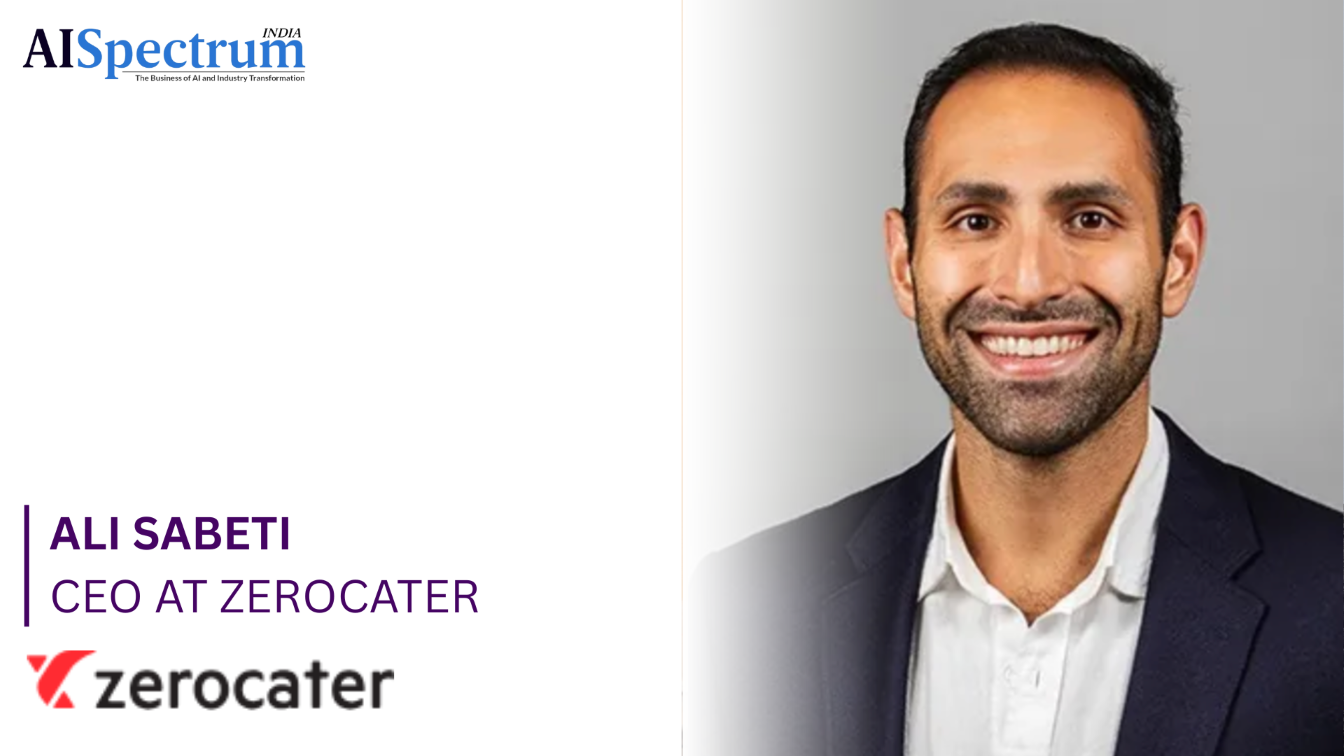
In this interview with AI Spectrum, Ali Sabeti, CEO of ZeroCater, explains how domain-specific AI can elevate hospitality rather than automate it away. He discusses the technical challenges of encoding real-world expertise into machine intelligence, the role of human-in-the-loop systems in high-stakes operations, and why vertical AI platforms powered by proprietary data may define the future of enterprise services.
CaterAi is described as a “human-like AI agent” with deep catering expertise. What were the key technical and operational challenges in translating 15 years of proprietary catering knowledge into an AI system that can plan complex events autonomously?
The core challenge was turning operational expertise into structured intelligence that AI could reliably use. Over fifteen years, Zerocater accumulated deep knowledge about how people eat together at work, but that knowledge lived in the heads of chefs, event planners, and operations teams. To make CaterAi possible, we built the proprietary FoodIQ dataset, tagging millions of menu-level data points across more than 60 attributes like portioning, allergens, cuisine types, vendor reliability, and cultural metadata.
We then trained large language models on the decision-making frameworks developed by hundreds of hospitality professionals who've fed some of North America's largest companies. The system uses our proprietary LLM’s with real-time data, enabling contextual reasoning about budgets, dietary needs, themes, and vendor availability across diverse markets like the SF Bay Area and NYC, where logistics and cultural expectations vary significantly.
Traditional event catering is notoriously fragmented and time-consuming. In what specific ways does CaterAi improve on existing digital tools such as food delivery apps or catering marketplaces, both in speed and accuracy?
CaterAi fundamentally shifts from marketplace coordination to autonomous execution. Where traditional marketplaces like EZCater connect companies with vendors but still require manual coordination, CaterAi replaces weeks of emails and spreadsheets with a single five-minute chat.
The system handles full-stack planning in one workflow: menus, portioning, budgets, dietary needs, staffing, equipment, and décor. It understands context automatically, event type, company culture, dietary restrictions, and themes, without explicit instructions. And because it learns from thousands of past events, it continuously improves through predictive optimization.
Compared to delivery apps like DoorDash or UberEats, which are built for individual meals, CaterAi is purpose-built for catering. It’s meant to handle multi-day events for hundreds of people, manages staffing and décor, and ensures dietary compliance, all backed by operational expertise and human QA oversight that competitors can't match.
Menu creation involves not just logistics but taste, culture, and dietary nuances. How does CaterAi ensure menus are both personalized for guests’ preferences and compliant with dietary restrictions, while still maintaining creativity?
CaterAi treats food as both data and culture. On compliance, the system has inclusion-by-design built in, vegan, halal, kosher, and allergen-aware planning are automatic. Proprietary metadata tags dietary attributes at the item level, so portions and options adjust based on guest profiles.
But it goes beyond compliance. CaterAi draws on restaurant ownership and cuisine metadata to support authentic cultural representation, designing themed menus for events like AAPI Heritage Month with verified accuracy. It pulls from regional trends and 15 years of menu performance data to understand what tastes good, what presents well, and how to balance dietary needs without sacrificing quality.
Human oversight ensures menus feel thoughtful and personal, not algorithmic. The goal is to use technology to elevate hospitality, not replace it.
CaterAi can plan multi-day events for thousands of guests. What safeguards or human-in-the-loop processes ensure reliability, especially when managing staffing, décor, or large vendor networks?
CaterAi operates with AI speed and human reliability. Every AI-planned event would be reviewed by our operations and QA team before execution. On the day of the event, onsite staff would ensure flawless delivery, and we have failover protocols when vendors slip or last-minute changes occur.
The system is built on real-world performance data from thousands of daily meals. Catering Partner reliability scores inform routing decisions, and we maintain multi-vendor redundancy for large-scale events. After each event, feedback loops refine future recommendations. The result is a hybrid model where AI handles complexity and speed, but humans ensure nothing falls through the cracks.
The system integrates thousands of restaurants and caterers. How does CaterAi evaluate quality, consistency, and vendor suitability for different types of events?
CaterAi evaluates catering partners through 15 years of proprietary FoodIQ data and performance tracking. We've built menu-level ratings, delivery reliability metrics, and dietary compliance scores for more than 1,000 vetted partners across 12 North American markets. This isn't crowdsourced reviews, it's operational intelligence from thousands of corporate events.
The system matches vendors based on event type, budget optimization, dietary and cultural requirements, and geographic coverage. Post-event feedback continuously refines vendor scoring, so we know which caterers excel at specific event types. This creates a data moat no competitor can replicate, because the insights come from real-world execution, not just transactional data.
Looking ahead, what role do you envision AI playing in the wider foodservice and hospitality ecosystem? Could we see CaterAi evolve into a broader platform for predictive event planning or supply chain optimization?
Zerocater's vision is to make catering effortless with the power of AI, and CaterAi is the first step. We see the system evolving into predictive event planning, learning company patterns like dietary trends and seasonal preferences, then proactively suggesting menus based on calendars and culture. It could anticipate supply chain needs before customers know they need them.
Beyond that, there's an opportunity to modernize the trillion-dollar food operations industry with data-driven infrastructure, automating logistics from vendor sourcing to dietary compliance and scaling hospitality intelligence across enterprise meal programs.
The broader lesson is that vertical AI, built on domain expertise and proprietary data, will outperform generic models. The companies that win won't have the biggest models; they'll have real-world intelligence that can't be replicated. And they'll use it not to replace hospitality, but to make it more human, inclusive, and scalable than ever before.