

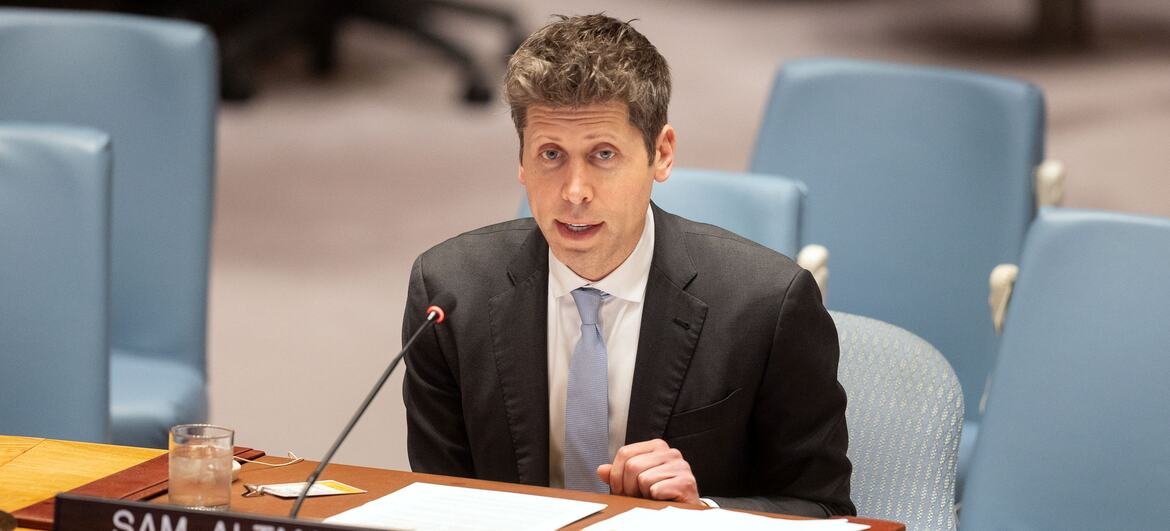
OpenAI CEO Sam Altman has called for stronger safeguards and international cooperation to ensure increasingly capable artificial intelligence (AI) systems remain under human control. Addressing the United Nations Security Council, Altman highlighted both the potential of AI to expand human opportunity and the risks associated with rapidly advancing and increasingly autonomous systems.
Altman said recent progress in AI has made its potential benefits and risks more immediate, pointing to applications including new medicines, improved healthcare, stronger education and more productive economies. He argued that AI should increase people's agency and ability to learn, create, discover and participate, rather than simply automate human activities.
At the same time, Altman identified two major ways AI progress could go wrong. The first is a loss of human control as AI systems become more capable, autonomous and potentially able to contribute to the development of future AI systems.
He said AI developers need to understand what advanced systems are doing and establish strong evidence that they will behave as intended. Altman also cautioned against accepting significant technological risks simply because the potential benefits of AI are substantial.
According to Altman, the second major risk is excessive concentration of AI capabilities and power. He said no individual, company or country should be able to use the most powerful AI systems to impose its worldview on others.
Altman said OpenAI's approach is centred on giving people greater control over their lives and more capacity to address individual and societal challenges. He also rejected both what he described as blind optimism and “doomerism”, advocating a balanced approach to managing AI's opportunities and risks.
He emphasised the need for international cooperation and responsible development as AI capabilities continue to advance, particularly as governments and institutions work to keep pace with the technology.