

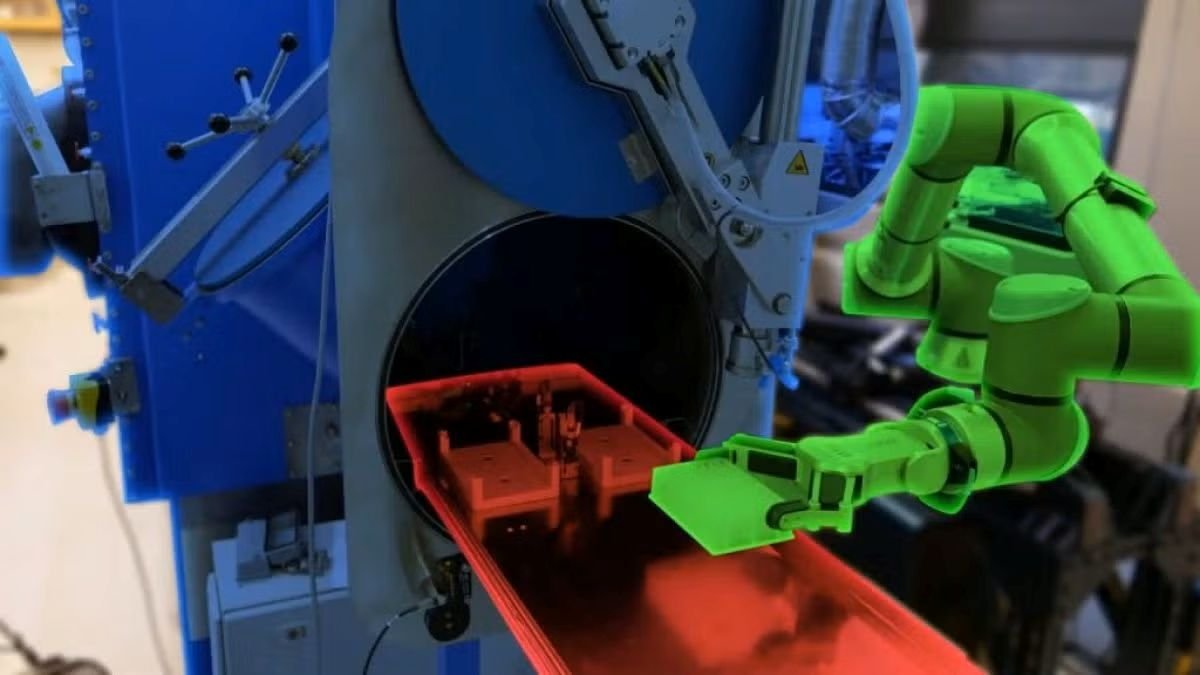
The University of North Carolina at Chapel Hill (UNC-Chapel Hill), NC State University and the Massachusetts Institute of Technology (MIT) are collaborating on a US National Science Foundation (NSF)-funded initiative to establish a nationwide network of AI-enabled automated laboratories for chemistry and materials science.
The project is part of the NSF Directorate of Technology, Innovation and Partnership’s Programmable Cloud Laboratories (PCL) programme and aims to expand access to advanced laboratory infrastructure through remotely controlled, automated experimentation.
NC State University will lead the four-year initiative with a $20 million NSF award supporting the Self-Driving Platforms for Experimental co-Design in Chemistry and Materials Science (SPEED) programme. The SPEED Lab is led by NC State engineering professor Milad Abolhasani.
UNC-Chapel Hill is a partner institution, with chemistry professor Alex Miller leading a team that includes chemistry professors Jillian Dempsey and Erik Alexanian, as well as computer science professor Ron Alterovitz. The project will also contribute to the research portfolio of UNC’s Sustainable Energy Research Consortium, led by Miller.
A central objective of SPEED is to advance self-driving laboratories, in which human researchers define scientific objectives while robotic systems autonomously perform laboratory procedures. The programme will also explore ways to allow researchers to remotely control automated laboratory instruments.
UNC’s role will include developing new interfaces for accessing and controlling laboratory equipment and testing a broad range of chemical reactions. The researchers aim to make advanced experimentation more accessible to scientists who do not have direct access to sophisticated laboratory infrastructure.
According to Miller, individual self-driving laboratory modules could accelerate the journey from initial discovery to an optimised outcome by 100 times or more by conducting experiments in parallel and using machine learning to predict which experiments should be performed next.
The UNC team will also help implement the project’s scientific objectives using NC State’s automated laboratory infrastructure. These include developing more efficient synthetic pathways for high-value specialty and fine chemicals and accelerating the development of next-generation materials for applications such as energy-efficient digital displays.
The project combines AI, machine learning, robotics and remote laboratory access to create an automated research workflow in which experimental results can inform subsequent experiments. Such systems could reduce the time required for iterative experimentation while allowing researchers across the US to access advanced laboratory capabilities remotely.
Miller said the automated robotic experimentation capabilities developed at NC State could accelerate the discovery and optimisation of chemical reactions with potential societal benefits. The UNC team will expand the range of reactions investigated through the self-driving laboratories while developing new tools for reliable remote communication with laboratory instruments.
The initiative reflects a broader shift towards AI-driven scientific discovery, where autonomous laboratory systems can perform experiments, analyse results and help identify promising research pathways with limited manual intervention.