

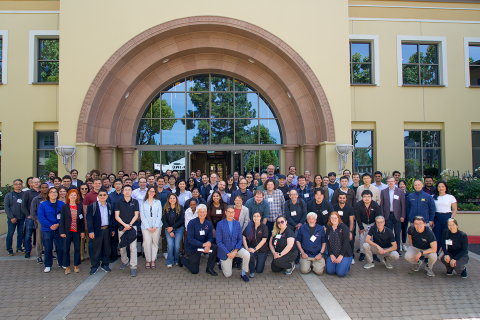
Toyota Research Institute (TRI) has unveiled the next phase of its collaborative University Research Program (URP 3.0), expanding its long-term partnerships with leading North American universities to accelerate innovation in artificial intelligence, robotics, advanced driving systems and material science.
Launching in 2026, URP 3.0 will support 69 research projects across 31 universities, bringing together 88 TRI researchers and 104 faculty members in what the company describes as its largest research cohort to date. The expanded initiative also includes 11 new participating institutions, while continuing collaborations with long-standing academic partners such as.
The program is designed around deep collaboration between academia and industry, with each project co-led by university researchers and TRI co-investigators to bridge foundational research with practical applications. TRI stated that many projects under URP 3.0 are focused on developing intelligent systems capable of learning faster, adapting more effectively and operating autonomously in complex real-world environments.
Among the highlighted projects, researchers at are exploring human-centred AI systems that use extended reality technologies to improve collaborative decision-making. Another Carnegie Mellon project is advancing scalable reinforcement learning methods to enable AI systems to autonomously improve performance through experience-based learning.
Meanwhile, researchers at Stanford University are developing wearable systems that capture human motion and tactile feedback to train advanced robotic behaviour models for dexterous manipulation tasks.
TRI noted that the initiative also includes 10 Young Faculty Research projects, reinforcing its commitment to nurturing the next generation of AI and robotics researchers. Over the past decade, the URP program has evolved into one of the automotive industry’s largest collaborative academic research ecosystems focused on long-term, curiosity-driven innovation.