

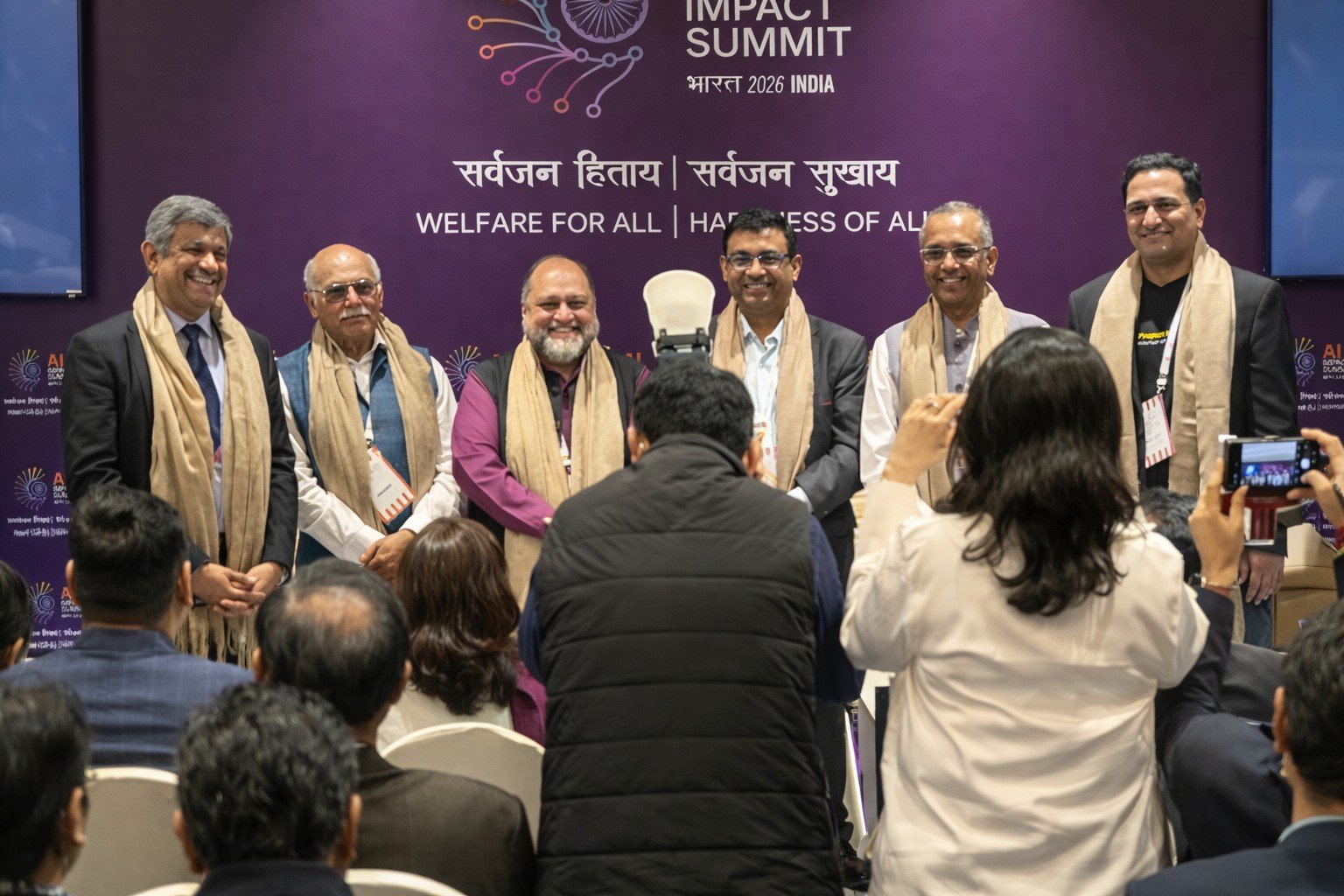
The session titled AI And The Future Of Skilling, held as part of the AI India Impact Summit 2026, brought together leaders from policy, industry, education and innovation ecosystems to examine one of the defining challenges of the AI era: preparing human capital for rapid technological transformation.
As artificial intelligence continues to reshape economic structures and redefine workplace capabilities, the discussion centred on how India can build a workforce that is not only AI aware but AI ready. Speakers explored practical frameworks for workforce transition, the role of education systems, and the collaborative models needed to ensure AI adoption drives inclusive growth rather than widening capability gaps.
Setting The Context
The session opened with a clear recognition that AI is no longer a future trend but a present reality influencing job roles, organisational structures and industry competitiveness. Participants emphasised that technological readiness alone is insufficient without parallel investment in skills, institutional reform and capacity building.
The conversation positioned skilling as a strategic pillar of national competitiveness. As AI adoption accelerates across industries, the ability to create adaptable learning ecosystems will determine how effectively India translates digital transformation into economic opportunity.
Policy Pathways And National Priorities
A central theme throughout the discussion was the role of policy in shaping AI readiness at scale. Speakers highlighted the importance of aligning national skilling initiatives with emerging industry demands so that education systems evolve in tandem with technological change.
Dr. Manish Kumar, representing the perspective of large scale skilling initiatives, stressed the importance of building AI first approaches into training models and workforce development programmes. The discussion emphasised that skilling frameworks must move beyond static curriculum design and adopt adaptive, technology informed approaches that evolve continuously.
Industry And Academia Collaboration
A strong consensus emerged that industry and academia must operate as interconnected partners rather than parallel ecosystems.
Narayanan Ramaswamy highlighted the need for closer alignment between market expectations and academic learning outcomes, noting that employers increasingly seek hybrid skills combining technical literacy, creativity and problem solving.
The discussion explored how partnerships between enterprises and universities can accelerate curriculum modernisation, encourage experiential learning and reduce the gap between education and employability.
Institutional Readiness And Educational Innovation
Higher education institutions were identified as critical enablers of AI adoption. Participants reflected on how universities must evolve from knowledge delivery centres into innovation driven learning environments.
MS Vijay Kumar, known for his work in education innovation, emphasised that learning models must shift towards interdisciplinary, flexible frameworks that prepare students for continuous reskilling rather than one time qualification pathways.
Institutional AI readiness was discussed not only in terms of infrastructure, but also faculty preparedness, curriculum redesign and integration of AI tools into teaching practices.
Creativity And Emerging Digital Economies
The session also highlighted the growing importance of creative and immersive technology sectors within India’s AI landscape.
Ashish Kulkarni, representing India’s creative technology ecosystem, spoke about the convergence of AI with design, storytelling and immersive media. The discussion reinforced that future workforce strategies must consider emerging sectors such as AVGC XR, where creative skills intersect with advanced technology.
This perspective broadened the conversation beyond coding and data science, highlighting the need for multidisciplinary talent capable of working across creative and technical domains.
Scalable Digital Learning Ecosystems
Another key insight came from the emphasis on scalable digital learning platforms capable of reaching diverse populations.
Shankar Maruwada underscored the importance of open learning ecosystems and collaborative platforms that democratise access to high quality digital education. Participants agreed that technology enabled learning models are essential for bridging regional and institutional disparities in AI exposure.
Key Takeaways From The Session
Several clear themes emerged from the discussion:
-
AI readiness must be treated as a national workforce strategy rather than a niche technical initiative.
-
Collaboration between policymakers, industry and academia is essential to accelerate meaningful skilling outcomes.
-
Higher education institutions need to shift towards interdisciplinary and future focused learning models.
-
Digital platforms and scalable learning ecosystems will play a critical role in widening access to AI education.
-
Creativity, critical thinking and adaptability are emerging as equally important alongside technical AI skills.
The session concluded with a shared understanding that AI driven transformation will create significant opportunity, but only for economies that invest proactively in human capital development.
The discussion reinforced that the future of skilling is not simply about teaching AI tools. It is about cultivating adaptable, resilient and innovation oriented talent capable of evolving alongside technology.
At the AI India Impact Summit 2026, the message was clear: building an AI ready workforce will require sustained collaboration, forward looking policy design and a willingness to rethink how education, industry and technology intersect. As AI continues to reshape economies, the ability to prepare people for this shift will define long term competitiveness and inclusive growth.