

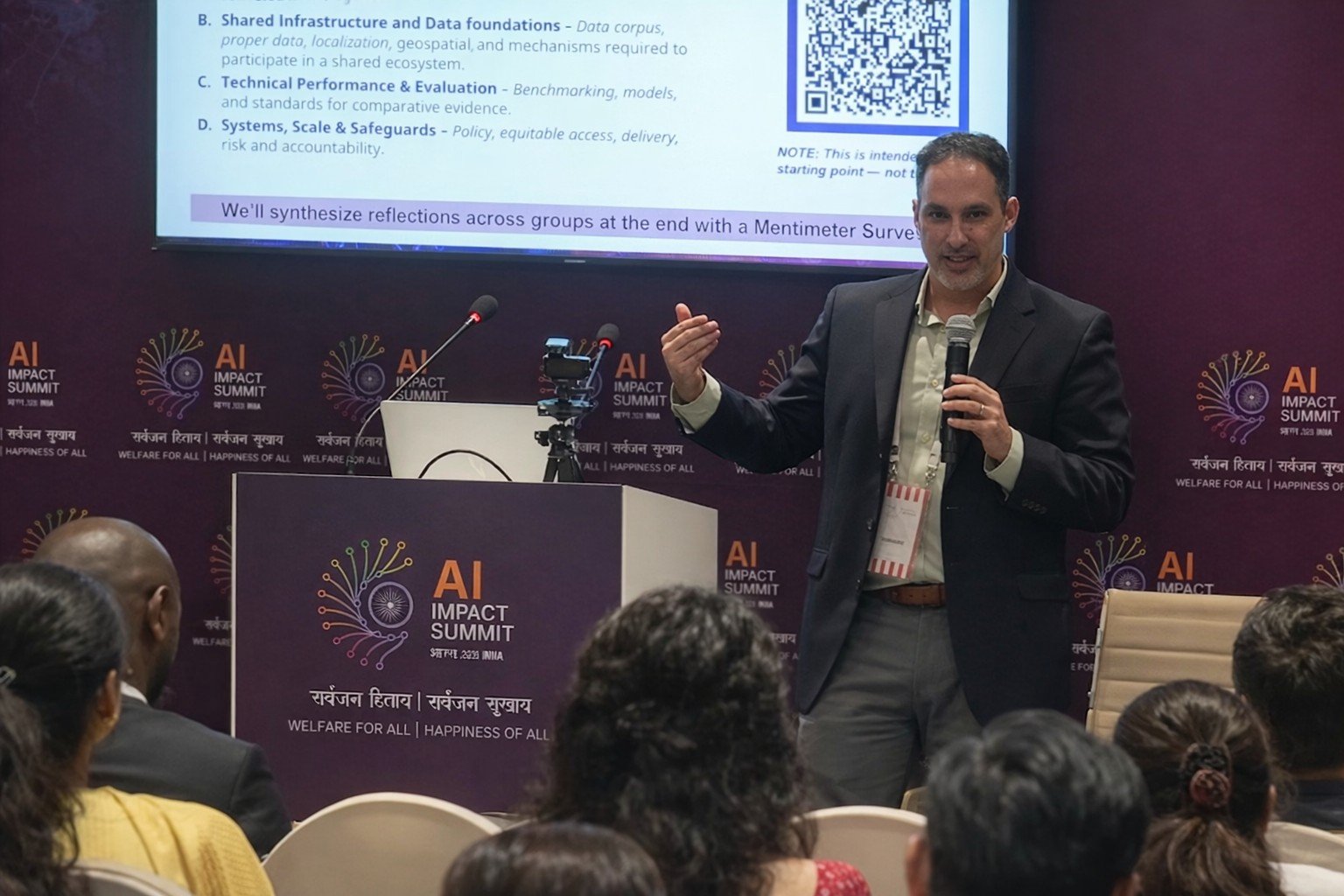
A focused and highly collaborative session at the AI India Impact Summit 2026 explored how artificial intelligence can move beyond experimentation toward large scale, equitable impact in agriculture. Titled From Vision To Action: Scaling Equitable AI Advisory Systems Through AGX AI, the discussion convened global leaders working at the intersection of agricultural development, data science, and AI driven advisory systems.
Held at Bharat Mandapam, the interactive session examined how AGX AI is emerging as a growing community of practice dedicated to responsibly scaling AI solutions for small scale producers. The conversation highlighted a clear shift from isolated pilots toward shared infrastructure, benchmarking standards, and collaborative learning ecosystems designed to accelerate impact across regions.
Session Context And Strategic Focus
Agriculture continues to face complex challenges linked to climate variability, productivity pressures, and unequal access to knowledge systems. Against this backdrop, the session positioned AI advisory systems as a bridge between research driven innovation and practical decision support for farmers.
Panellists emphasised that equitable scaling requires more than technical advancement. It demands shared governance, transparent model development, and community participation to ensure solutions remain relevant to diverse agricultural contexts.
The central message was clear: scaling AI in agriculture must prioritise inclusion and responsible deployment alongside performance.
Key Discussion Themes
1. AGX AI As A Community Of Practice
Speakers described AGX AI as a collaborative ecosystem rather than a single technology platform. The initiative brings together stakeholders to:
-
Develop common benchmarks for evaluating advisory systems
-
Build shared data corpora that reflect real agricultural diversity
-
Encourage open learning across regions and sectors
-
Align technical innovation with development outcomes
This cooperative model was presented as essential for avoiding fragmentation and enabling long term sustainability.
Responsible Scaling For Small Scale Producers
A strong focus of the session was ensuring that AI systems work for smallholder farmers, who often face limited access to digital infrastructure and advisory support. Discussions centred on:
-
Designing AI tools that operate under low resource conditions
-
Ensuring language and context adaptability across geographies
-
Balancing automation with human advisory support
-
Avoiding bias through inclusive data representation
The panel argued that equitable AI must be built around farmers’ realities rather than expecting farmers to adapt to technology constraints.
Benchmarking And Data Infrastructure
Participants underscored the importance of robust benchmarking frameworks to measure advisory performance and trustworthiness. Shared datasets and transparent evaluation mechanisms were highlighted as foundational elements that can:
-
Improve reliability of recommendations
-
Enable cross regional comparison of model effectiveness
-
Support policy and funding decisions based on evidence
-
Accelerate collective learning across organisations
The discussion reinforced that data quality and collaboration are as critical as algorithmic innovation.
Collaboration Across Development And Innovation Stakeholders
The session demonstrated how partnerships between research bodies, philanthropic organisations, and AI practitioners are enabling broader experimentation and deployment.
David Bergvinson and Sophie Barrowman from DevGlobal emphasised the importance of shared learning frameworks that allow diverse actors to align around common goals.
Michael Minkoff of Athena Infonomics highlighted analytical approaches and model design considerations needed to ensure advisory tools remain evidence driven and adaptable.
Representing a global philanthropic lens, Julianna Drinan from the Bill & Melinda Gates Foundation underscored the need to translate technical innovation into measurable development outcomes, particularly in regions where agriculture remains closely tied to livelihoods and resilience.
Emerging Insights From The Session
Several insights stood out across the discussion:
-
AI advisory systems are moving from pilot phase toward structured scaling models
-
Shared benchmarks and data collaboration are becoming foundational to trust
-
Responsible governance is essential for long term adoption
-
Cross sector partnerships significantly improve learning speed and scalability
-
Community driven approaches can help prevent duplication and fragmentation
Broader Industry Significance
While many AI conversations focus on model capability and competition, this session placed equity and practical implementation at the centre. The discussion framed agricultural AI not simply as a technology challenge, but as a systems challenge involving data, institutions, policy, and human behaviour.
By positioning AGX AI as a shared learning platform, the panel highlighted a new operating model for AI development one built on collaboration rather than isolated innovation. This approach could influence how future advisory systems are designed across sectors beyond agriculture.
From Vision To Action captured a growing consensus that the next stage of AI adoption in agriculture will depend on collective effort, evidence based learning, and inclusive design principles. The session reinforced the idea that scalable AI systems must balance technological ambition with local relevance and trust.
As AI continues to reshape global development conversations, the dialogue at AI India Impact Summit 2026 suggested that equitable advisory systems, supported by shared infrastructures like AGX AI, may offer a practical blueprint for responsible innovation across emerging markets.