

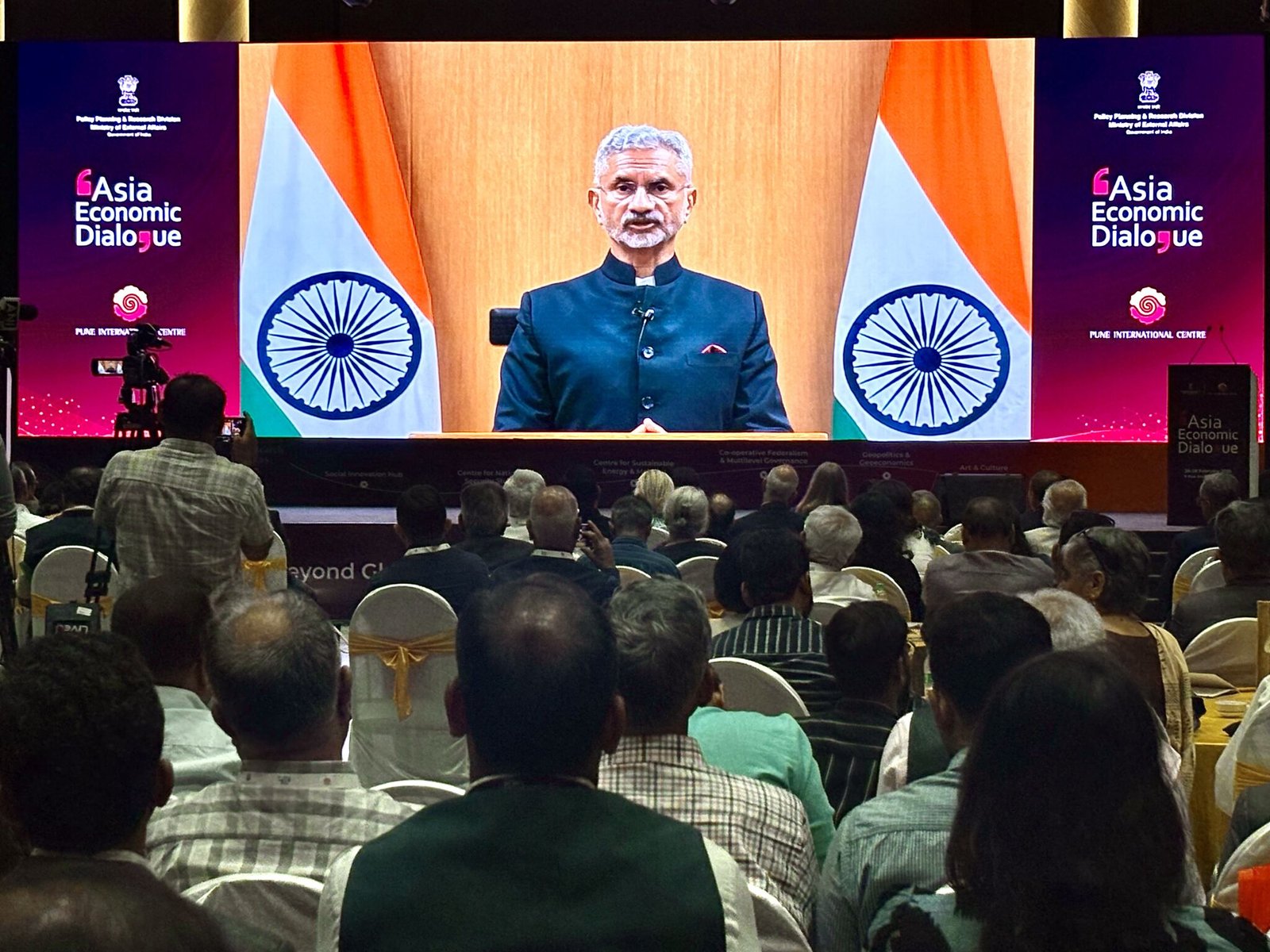
Artificial intelligence, semiconductors, data and critical minerals have moved beyond their traditional roles as engines of economic growth to become instruments of national power, External Affairs Minister S. Jaishankar said, underlining the shifting geoeconomic landscape where technology and strategic resources are central to global influence.
Speaking at the seventh edition of the Asia Economic Dialogue (AED) in Pune, Jaishankar asserted that the era of linear globalisation is over. He noted that artificial intelligence and other frontier technologies are now deeply intertwined with national security, supply chain resilience and geopolitical strategy. “There has been a gaming of the world trading system. Connectivity has been proposed for national advantage. Rules have been cited and observed selectively. And market shares have been leveraged for non-economic purposes,” he said.
According to Jaishankar, governments worldwide are increasingly making economic decisions shaped by political and security considerations, with re-industrialisation emerging as a strategic imperative. Countries are deploying technologies, capabilities and financial resources to strengthen domestic manufacturing and secure critical supply chains.
Highlighting India’s approach, he said the country is focused on fostering partnerships in trade, mobility, production, services, technology, skills and talent. He pointed to collaborations in critical minerals, migration and mobility agreements, supply chain resilience and advanced manufacturing. Referring to the recently held AI Impact Summit 2026, Jaishankar said India’s digital capabilities and talent base position it strongly to scale and responsibly diffuse AI technologies.
The inaugural session also featured a panel discussion on “Geoeconomics beyond globalisation,” chaired by Ambassador Gautam Bambawale. Panellists reflected on the turbulence in global politics and trade. Deborah Elms of the Hinrich Foundation highlighted growing trade volatility, particularly following policy shifts under US President Donald Trump, noting that companies face unprecedented uncertainty over tariff regimes.
Industry leaders also weighed in on policy reforms needed to strengthen India’s competitiveness. Bharat Biotech Executive Chairman Krishna Ella urged the government to prioritise long-term industrial incentives over short-term subsidies. Calling for a five-year tax holiday for industry, he argued that such a move would enable Indian companies to expand aggressively into African and Latin American markets and compete globally.
The three-day international conference, themed “Geoeconomics beyond globalisation: Tariffs, technologies and strategic alignments,” has brought together 45 speakers from nine countries, including policymakers, diplomats, academics and industry leaders, to examine how trade, technology and strategic alignments are reshaping the global order.