

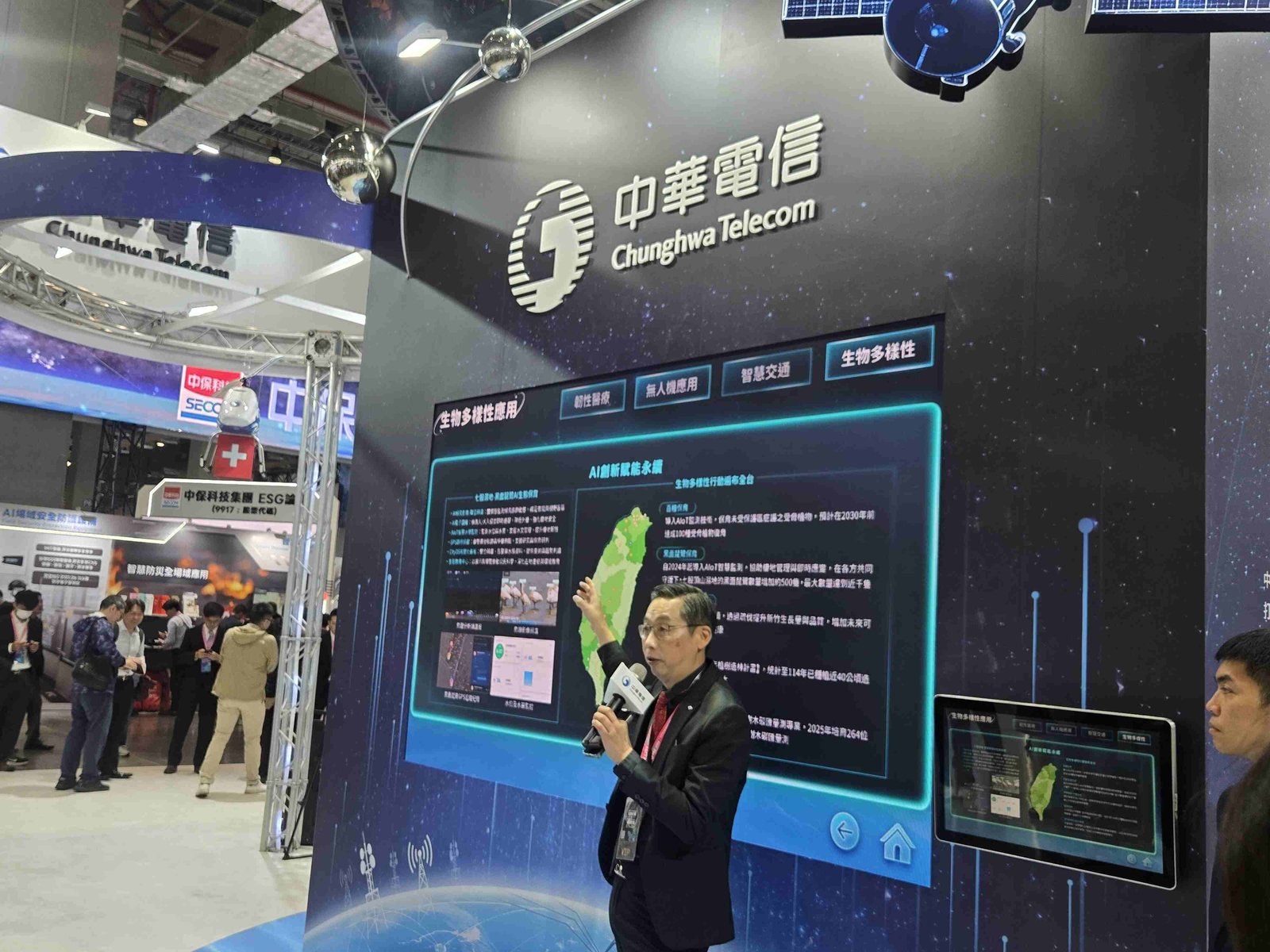
At the Smart City Summit & Expo (SCSE) 2026, Chunghwa Telecom presented a comprehensive showcase of its advanced digital infrastructure and AI driven connectivity solutions, positioning itself as a key enabler of next generation smart cities.
The exhibit, centred around a visually immersive and space themed pavilion, highlighted Chunghwa Telecom’s expanding role in delivering integrated communication networks, satellite connectivity, and data driven platforms that support urban transformation at scale.
A key focus of the showcase was the company’s global connectivity footprint, demonstrating its international network presence and ability to support seamless cross border data transmission. Through high capacity fibre networks, subsea cables, and satellite integration, Chunghwa Telecom is strengthening the digital backbone required for smart city ecosystems.
The exhibit also underscored the role of AI powered infrastructure in enabling real time city operations. From intelligent network management to data driven service optimisation, the company is leveraging AI to enhance performance, reliability, and scalability across urban systems.
Notably, Chunghwa Telecom highlighted its role in enabling resilient healthcare systems, an increasingly critical pillar of smart cities. By combining high speed connectivity, cloud platforms, and AI driven data integration, the company supports telemedicine, remote diagnostics, hospital network integration, and emergency response systems. These capabilities ensure continuity of care, particularly during public health emergencies and in remote or underserved regions.
Visitors were introduced to a range of applications spanning smart governance, transportation, public safety, healthcare, and digital citizen services, illustrating how robust telecom infrastructure underpins the functioning of connected cities.
A standout feature of the pavilion was its emphasis on satellite enabled communication, reflecting growing demand for resilient and ubiquitous connectivity. This capability is particularly critical for disaster response, remote area coverage, and ensuring uninterrupted services across healthcare and emergency networks.
Chunghwa Telecom also highlighted its role in supporting AI driven city platforms and digital twin ecosystems, where high speed, low latency networks are essential for processing large volumes of real time data and enabling predictive decision making.
Company representatives noted that as cities evolve towards more intelligent and autonomous systems, connectivity infrastructure will become as critical as physical infrastructure, serving as the foundation for innovation, service delivery, and resilience.
The showcase further reinforced Taiwan’s broader ambition to integrate telecommunications, AI, healthcare, and digital infrastructure into a cohesive smart city framework that can be scaled both domestically and internationally.
As global cities increasingly prioritise digital transformation, public health resilience, and sustainability, Chunghwa Telecom’s presence at the summit demonstrates how next generation telecom networks are central to enabling smarter, safer, and more