

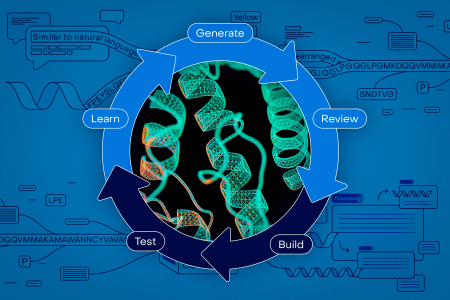
Artificial intelligence is rapidly transforming drug discovery and biological research, offering unprecedented capabilities to accelerate development timelines and deepen understanding of complex diseases. However, a major barrier remains: most life science researchers lack expertise in machine learning, limiting their ability to fully leverage these powerful tools.
Addressing this gap, OpenProtein.AI has introduced a no-code platform designed to bring advanced AI capabilities directly into the hands of scientists. The platform provides access to cutting-edge foundation models along with tools for protein design, structure and function prediction, and custom model training without requiring programming expertise.
Founded by Tristan Bepler and Tim Lu, the company is already gaining traction among pharmaceutical and biotech firms of varying sizes. In addition to commercial users, OpenProtein.AI is also offering free access to academic researchers, aiming to broaden innovation across the scientific community.
At the core of the platform are internally developed foundation models tailored for protein engineering. These models enable researchers to design and optimise proteins more efficiently, potentially shortening development cycles for therapeutics and industrial applications. Beyond efficiency, the technology opens new possibilities for creating entirely novel proteins with specific, desirable traits.
“It’s a really exciting time right now because these models can not only make protein engineering more efficient which shortens development cycles for therapeutics and industrial uses they can also enhance our ability to design new proteins with specific traits,” Bepler noted. He added that the company is exploring applications beyond proteins, with a broader vision of building a “language” for describing biological systems.
The origins of this innovation trace back to Bepler’s doctoral research at Massachusetts Institute of Technology, where he studied computational and systems biology. Under the mentorship of Bonnie Berger, Bepler investigated the limitations of existing biological models, particularly the lack of a detailed understanding of biomolecules such as proteins.
His early work focused on predicting amino acid sequences and protein structures using evolutionary data an approach that predated the release of AlphaFold by Google. This research ultimately contributed to the development of one of the first generative AI models for protein design, often referred to as a “protein language model.”
Today, OpenProtein.AI is building on that foundation to make advanced AI tools more accessible and impactful. By removing technical barriers and enabling scientists to directly interact with sophisticated models, the company is positioning itself at the forefront of AI-driven biology.
As the life sciences industry increasingly embraces artificial intelligence, platforms like OpenProtein.AI could play a pivotal role in accelerating innovation helping researchers move from data to discovery faster than ever before.