

Singapore has announced a series of major artificial intelligence (AI) partnerships and initiatives aimed at strengthening its position as a trusted global AI hub during ATxSummit 2026, the flagship event of Asia Tech x Singapore (ATxSG).
Speaking at the summit, Minister for Digital Development and Information Josephine Teo said the initiatives signal Singapore’s shift from experimenting with AI tools to building, deploying and governing real-world AI systems capable of delivering impact at scale.
A key announcement was the launch of Singapore’s first large-scale physical AI testbed at the Punggol Digital District (PDD). The initiative is a collaboration between the Infocomm Media Development Authority (IMDA), JTC and the Singapore Institute of Technology (SIT), alongside industry partners including DHL, Grab, Certis and QuikBot. The testbed will support multi-use-case and multi-operator robotics deployments in public spaces, including food and parcel delivery, cleaning and security patrol services.
To strengthen embodied AI capabilities, IMDA and the National Robotics Programme will collaborate with companies such as FieldAI, Thoughtworks, Slamtec and Unitree to develop and trial robotics applications through SIT’s new Centre for Intelligent Robotics.
Singapore also announced new partnerships with Google and OpenAI. Under a new National AI Partnership, Google will work with the Singapore Government on AI deployment, workforce readiness and trusted AI ecosystems. Meanwhile, OpenAI signed an agreement with the Ministry of Digital Development and Information to launch the “OpenAI for Singapore” initiative, backed by a commitment exceeding S$300 million to support applied AI innovation and talent development.
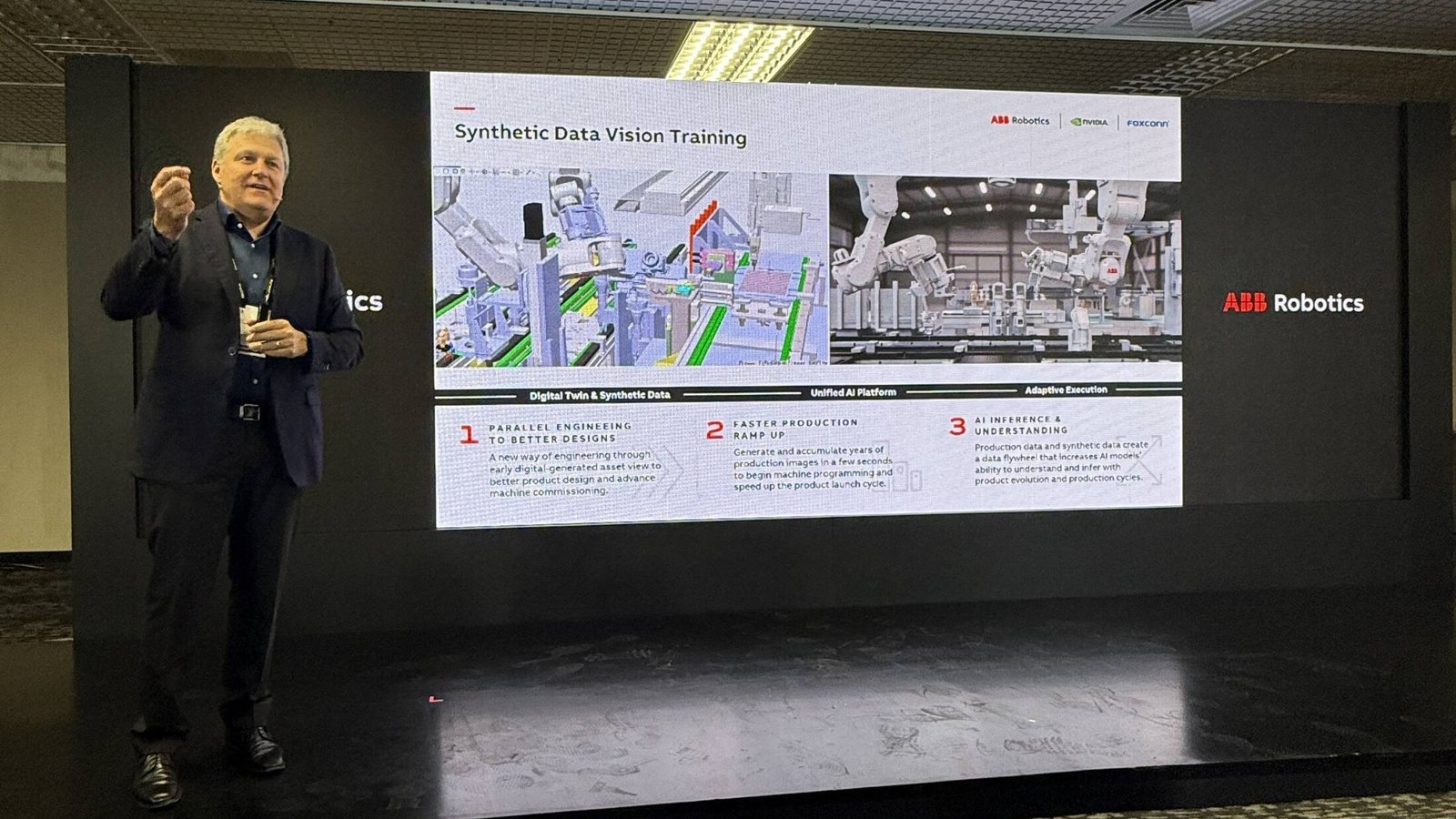
Additionally, NVIDIA announced a new AI research lab in Singapore focused on embodied AI and efficient AI computing for manufacturing applications, marking the company’s second research presence in the Asia-Pacific region.
Singapore also unveiled updates to its Model AI Governance Framework for Agentic AI, reinforcing its risk-based and collaborative approach to AI governance as adoption accelerates globally.