
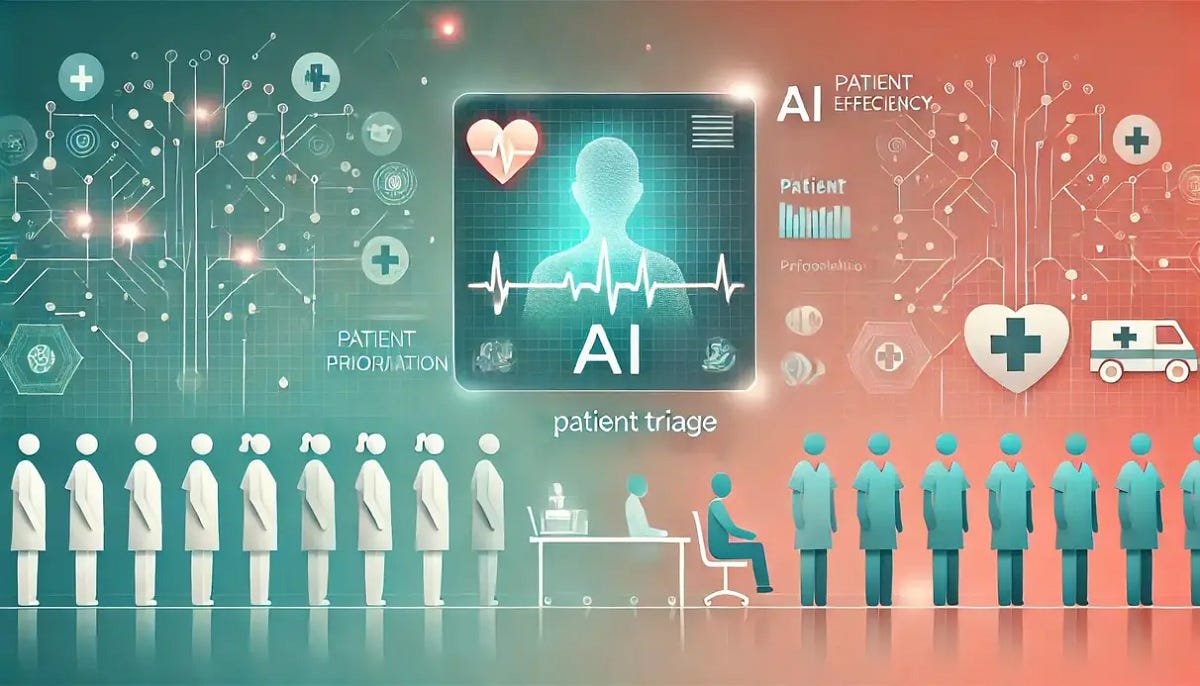
Hospitals around the world are facing an unrelenting challenge: delivering timely, effective care while managing growing patient volumes and clinician workloads. Traditional triage methods, reliant on manual review and judgement, can no longer keep pace.
Enter AI-powered Triage Agents — intelligent systems capable of analysing real-time patient data, assessing clinical risk, and instantly notifying the right medical teams. The result: faster interventions, improved outcomes, and reduced pressure on healthcare professionals.
1. The Growing Need for AI-Powered Triage
The Strain on Clinical Staff
Doctors and nurses today are inundated with data — from lab results and patient notes to vital signs and wearable outputs. Manual triage is not only time-consuming but can miss subtle warning signs that precede critical deterioration.
Every Second Counts
In emergencies such as heart failure or sepsis, delays of even 60 minutes can dramatically increase mortality. AI triage systems identify these early red flags automatically, ensuring that the most urgent cases receive attention first.
Overcoming Information Overload
Modern hospitals generate terabytes of patient data daily. AI excels at recognising the patterns humans might overlook — helping clinicians focus on decisions rather than data review.
2. How a Triage AI Agent Works
A Triage AI Agent is built from a series of coordinated intelligence modules:
-
Data Ingestion – Collects and standardises data from medical devices, EHR systems, and patient apps.
-
Feature Extraction – Transforms raw data into clinically relevant variables for deeper analysis.
-
Assessment Engine – Uses a blend of logic and machine learning to determine risk levels and prioritise alerts.
-
Alert Dispatch – Routes notifications to the right clinical teams via dashboards or secure messaging.
-
Feedback Loop – Monitors outcomes, continuously refining the AI’s accuracy and triage efficiency.
3. Real-World Applications in Healthcare
-
Emergency Room Prioritisation – Analyses ambulance data in advance, enabling ICU preparation and cutting treatment initiation times by 20%.
-
Post-Acute Care Monitoring – Flags anomalies in wearable data, reducing preventable readmissions by 15%.
-
Chronic Care Management – Tracks deviations in blood pressure, glucose, or weight to prompt timely interventions.
4. Benefits for Healthcare Providers
-
Faster Time-to-Intervention – Urgent alerts reach staff in under 10 seconds, far faster than manual systems.
-
Reduced Cognitive Load – Filters out 30% or more low-priority alerts, helping clinicians focus on critical cases.
-
Consistent and Bias-Free – Applies the same triage logic 24/7, without fatigue or variability between shifts.
-
Scalable Resilience – Adapts to surges in demand, from daily peaks to pandemic conditions.
5. Best Practices for Deployment
-
Collaborate with Clinical Teams – Define alert thresholds, escalation paths, and workflow impact early.
-
Clean Data First – Ensure data quality and interoperability across hospital systems.
-
Start Small, Scale Smart – Pilot in high-impact areas (ER or ICU) before expanding network-wide.
-
Keep Humans in the Loop – Enable clinicians to validate, adjust, or override AI recommendations.
-
Audit Regularly – Track accuracy, false positives, and satisfaction to maintain performance.
6. Known Challenges and Mitigation
-
System Compatibility – Integrations may be required for legacy hospital systems.
-
Clinician Trust – Use explainable AI to clarify reasoning behind alerts and build confidence.
-
Privacy and Compliance – Maintain encryption and full audit trails aligned with GDPR and NHS Digital standards.
-
Equity in AI – Audit algorithms to prevent bias and ensure fair prioritisation for all patient groups.
7. The Road Ahead for Triage AI
The next generation of Triage AI will go beyond detection — towards proactive healthcare orchestration:
-
Predictive Scheduling – Automatically arranging follow-ups or reminders when risk levels rise.
-
Care Routing Bots – Coordinating between specialists, community care, and rehabilitation centres.
-
Population Intelligence Dashboards – Forecasting emergency department surges or outbreak patterns by analysing triage data trends.
A Smarter, Faster, Fairer Future for Care
AI-powered triage doesn’t replace clinicians — it amplifies their impact. By automating routine decisions, reducing delays, and improving accuracy, these systems redefine how modern hospitals operate.
In the era of digital healthcare, AI is becoming the first responder — ensuring that every patient gets the right care, at the right time.